Si-Based Anode Material: 4x the Capacity for Next-Gen Lithium Batteries
Related Topics
Silicon-based anode materials deliver 4x higher capacity than graphite, powering longer-range EVs and faster charging. Learn how silicon-carbon composites are transforming battery technology.
Follow us on
Battery technology is moving fast. For decades, graphite has been the standard anode material in lithium-ion batteries. But as demand grows for longer-range electric vehicles and more powerful devices, graphite is hitting its limits. That's where silicon-based anode materials come in—a game-changer that can store roughly four times more lithium than graphite.
We're talking about a shift that could change how EVs perform, how long devices last, and how fast batteries charge. Silicon has the potential to be the backbone of next-generation energy storage—if we can solve the technical challenges that come with it.
What Makes Silicon-Based Anodes Different
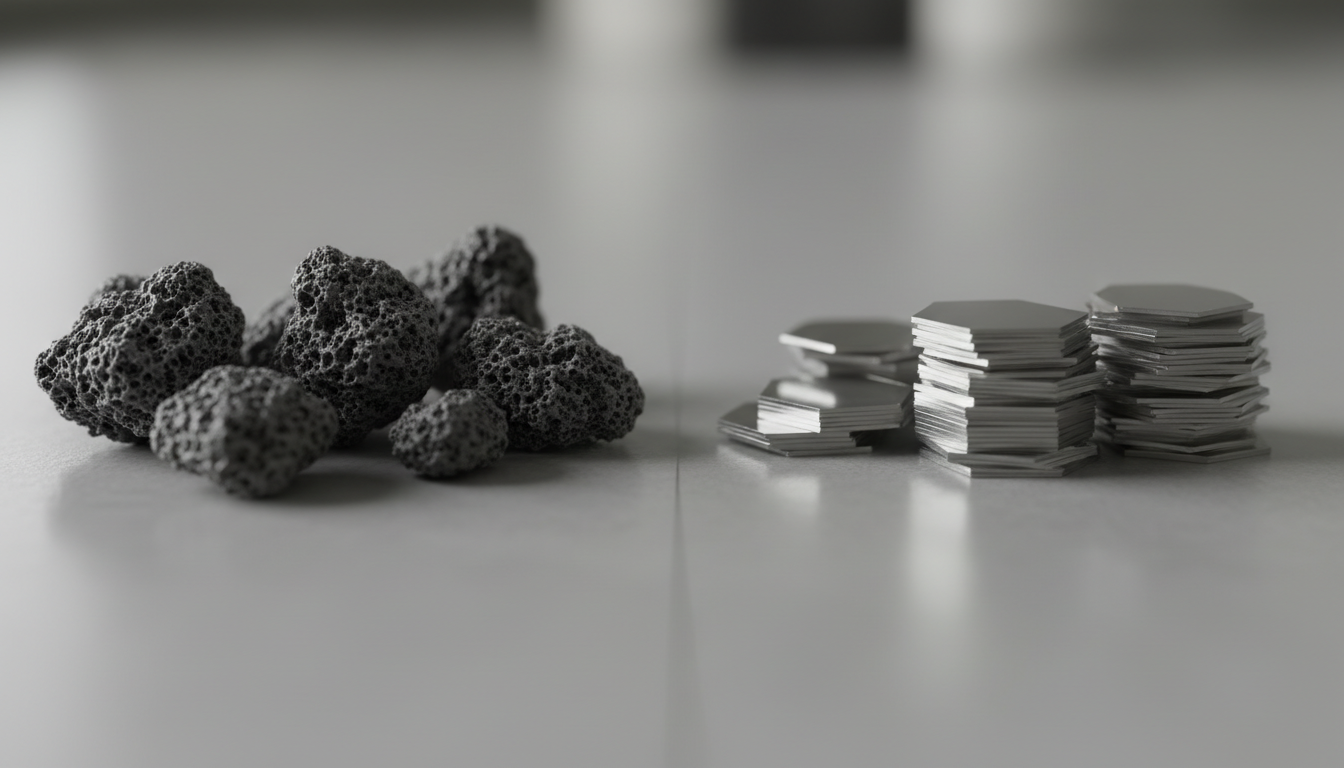
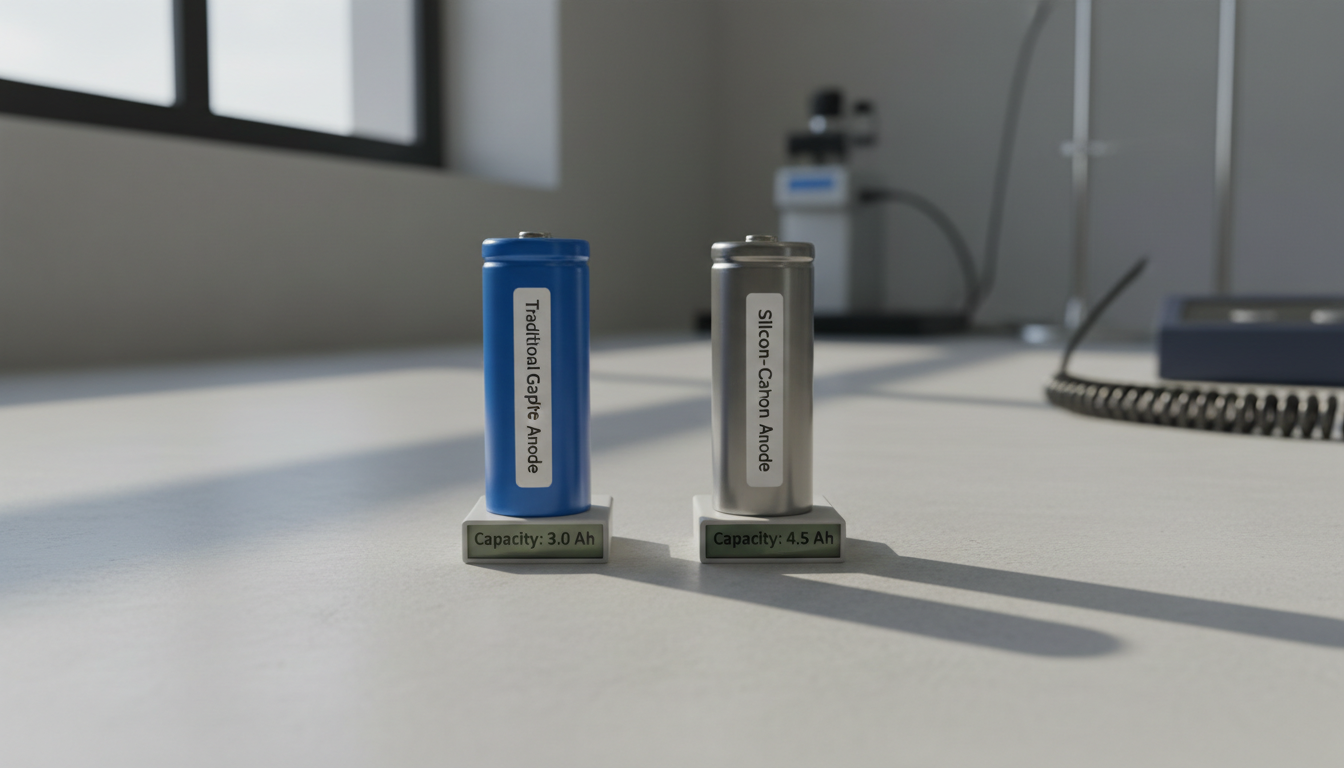
Silicon stands out because of its storage capacity. While traditional graphite anodes max out at 372 mAh/g, silicon can reach up to 4,200 mAh/g in its fully lithiated state. That's about 10 times higher in theory, and even with real-world compromises, you're still looking at significantly more energy density.
This higher capacity translates to real benefits. EVs could travel farther on a single charge. Phones and laptops could run longer between plug-ins. And batteries could get smaller while maintaining the same power output, which means lighter devices and vehicles.
Silicon is also one of the most abundant elements on Earth—second only to oxygen. There's no supply chain panic here. Unlike lithium or cobalt, silicon is easy to source and relatively affordable, which makes it an attractive option for scaling production without geopolitical headaches.
Why We Use Silicon-Carbon Composites
Pure silicon sounds great on paper, but there's a catch. When silicon absorbs lithium ions during charging, it expands by up to 300-400%. This massive volume change causes the material to crack, pulverize, and lose electrical contact with the rest of the battery. After just a few charge cycles, a pure silicon anode would essentially fall apart.
That's why we don't use silicon alone. Instead, silicon-carbon composites combine the high capacity of silicon with the mechanical stability and conductivity of carbon. The carbon acts as a buffer, absorbing some of the expansion and keeping the silicon particles in place. It also provides a conductive network so lithium ions can move efficiently.
At Highstar, we're advancing this technology by developing silicon-carbon composites that balance performance with durability. Our approach focuses on optimizing the ratio of silicon to carbon, ensuring that batteries can handle thousands of charge cycles without significant degradation. This is key for applications like electric vehicles, where battery longevity matters as much as energy density.
The Volume Expansion Challenge
Volume expansion is the biggest technical hurdle for silicon anodes. When lithium ions enter the silicon structure during charging, the material swells dramatically. This isn't a small effect—it's enough to cause cracking, electrode swelling, and loss of contact between the anode and the current collector.
Over time, this expansion creates another problem: an unstable solid electrolyte interphase (SEI) layer. The SEI forms on the anode surface and is supposed to protect it from further reactions with the electrolyte. But with silicon, the constant swelling and shrinking cracks the SEI layer, exposing fresh silicon to the electrolyte. This leads to continuous SEI formation, which consumes lithium ions and reduces the battery's overall capacity.
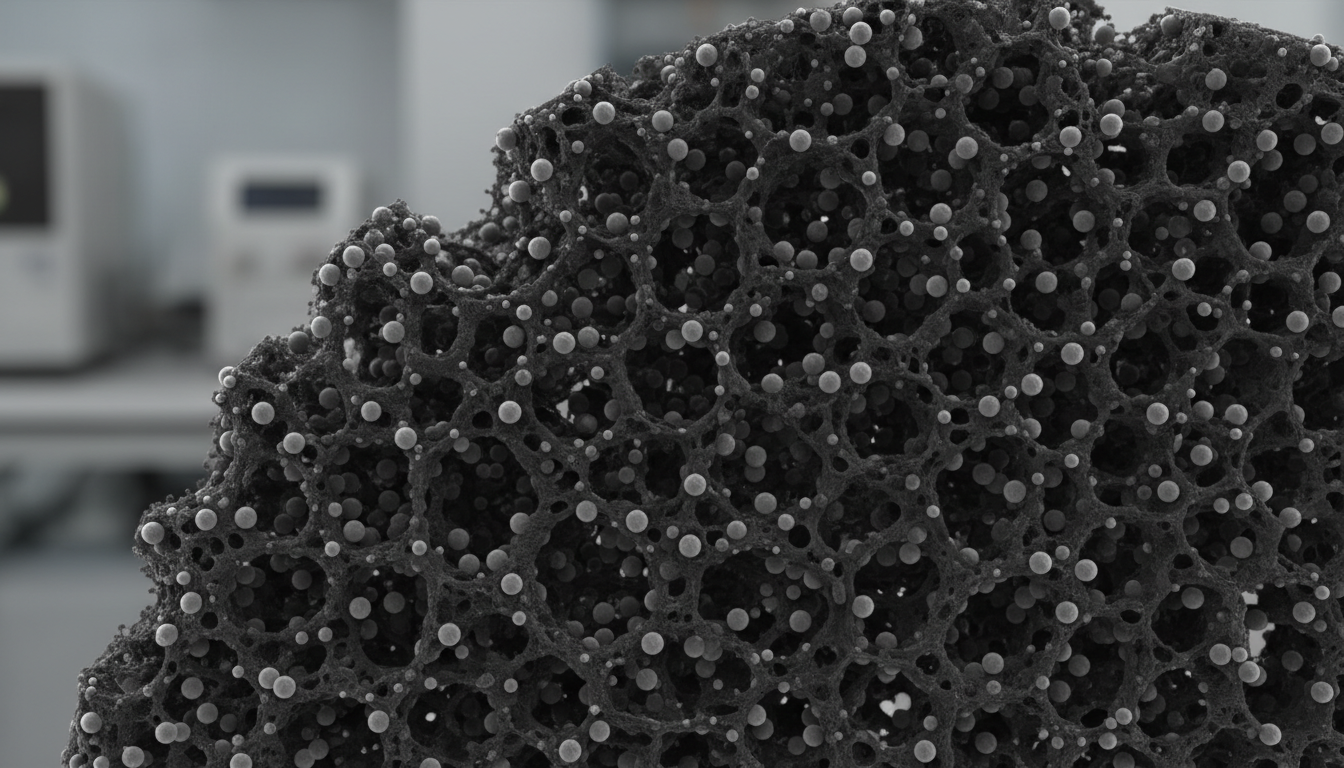
Researchers are tackling this in several ways. Some use nanostructured silicon, which handles expansion better because the particles are so small. Others coat silicon particles with protective layers or embed them in porous carbon matrices that provide room to expand. These strategies help, but they also add manufacturing complexity and cost.
We're working on our own solutions through advanced binder materials and electrode engineering. By carefully controlling the structure and composition of the anode, we can manage the volume changes more effectively and maintain battery performance over many cycles. This work is part of our broader commitment to high-energy lithium-ion batteries that meet real-world demands.
How Silicon-Carbon Composites Work
Silicon-carbon composites blend the best of both materials. Silicon provides the high lithium storage capacity, while carbon provides conductivity, structural support, and a stable SEI layer. The result is an anode that performs better than graphite but doesn't suffer from the catastrophic failures of pure silicon.
There are different ways to structure these composites. Some designs coat silicon nanoparticles with a carbon shell, like wrapping a layer of protection around each particle. Others embed silicon particles within a graphite matrix, where the graphite acts as a host and cushions the silicon's expansion. A third approach uses a core-shell structure, where silicon sits in the core and carbon forms an outer shell with some void space to accommodate swelling.
The choice of structure depends on the application. For EVs, you need high capacity and long cycle life. For consumer electronics, you might prioritize fast charging and compact size. Each design offers trade-offs between energy density, cost, and manufacturing complexity.
Our ternary lithium technology complements silicon-carbon anode development by optimizing the cathode side of the equation. When you pair advanced cathode materials with high-capacity anodes, you get batteries that deliver more energy, charge faster, and last longer.
Real-World Applications and Performance
Silicon-carbon anodes aren't just a lab curiosity—they're already making their way into commercial products. Several companies have begun using silicon-carbon composites in EV batteries, fitness trackers, and other high-performance devices. The improvements are measurable: energy densities around 1,000 mAh/g or more, compared to 350-400 mAh/g for pure graphite.
For EVs, this means longer driving ranges without bigger, heavier battery packs. A battery using silicon-carbon anodes could deliver 50% more energy in the same space, which translates to hundreds of extra miles per charge. That's a major step toward making electric vehicles practical for more people.
Charging speed is another benefit. Silicon's higher conductivity and better lithium-ion diffusion can enable faster charging—in some cases, reaching 80% capacity in 10-15 minutes. That's comparable to filling up a gas tank, which removes one of the main barriers to EV adoption.
We're seeing this play out in our own battery cell designs. Our cylindrical cells and prismatic cells incorporate advanced anode materials to push energy density higher while maintaining safety and reliability. These cells are designed for demanding applications where performance can't be compromised.
Manufacturing and Cost Considerations
Silicon-carbon anodes are more expensive to produce than graphite anodes—at least for now. The nano-sizing of silicon, the precision required for composite structures, and the need for specialized binders all add cost. There's also the challenge of achieving consistent quality at scale, which is critical for automotive and large-scale energy storage applications.
But costs are coming down. As manufacturing processes improve and production scales up, the price premium is shrinking. Some estimates suggest silicon-carbon anodes add a 10-20% cost increase at the pack level, but this is offset by gains in energy density and performance. You can use a smaller battery to get the same range, which reduces overall material costs.
Another advantage is compatibility with existing manufacturing infrastructure. Silicon-carbon composites can be produced using modified versions of the same equipment used for graphite anodes. This means battery makers don't need to build entirely new factories—they can adapt what they already have, which speeds up commercialization and reduces capital investment.
The Path Forward for Silicon Anodes
Silicon-based anode materials are no longer a futuristic concept. They're here, they're being commercialized, and they're getting better every year. The combination of high capacity, abundant raw materials, and compatibility with existing battery designs makes silicon a strong candidate to replace or complement graphite in the next generation of lithium-ion batteries.
But there's still work to do. We need better solutions for managing volume expansion, improving cycle life, and reducing costs. We need to refine manufacturing processes to ensure consistency and quality at scale. And we need to continue innovating on the cathode side to fully unlock the potential of high-capacity anodes.
At Highstar, we're committed to being part of this evolution. Our research and development efforts focus on practical, scalable solutions that deliver real benefits to customers. Whether it's electric vehicles, grid storage, or portable electronics, silicon-carbon anodes are helping us build batteries that perform better, last longer, and cost less over their lifetime.
Conclusion
Si-based anode materials represent one of the most promising advancements in battery technology today. With 4x the capacity of graphite, silicon-carbon composites are enabling longer-range EVs, faster charging, and more powerful devices. While challenges like volume expansion and manufacturing costs remain, progress is happening fast. We're moving from lab prototypes to commercial products, and the benefits are clear. As silicon anodes mature, they'll play a central role in powering the next wave of energy innovation.
FAQs
What is the main advantage of silicon-based anode materials over graphite?
Silicon-based anodes offer significantly higher energy storage capacity—up to 10 times that of graphite in theory, and about 4 times in practical applications. This means batteries can store more energy in the same space, leading to longer battery life, extended EV range, and faster charging capabilities. Silicon is also abundant and inexpensive, making it a scalable alternative to graphite.
Why don't we use pure silicon instead of silicon-carbon composites?
Pure silicon expands by 300-400% when it absorbs lithium ions during charging. This massive volume change causes the material to crack and lose electrical contact, leading to rapid battery failure. Silicon-carbon composites solve this by using carbon to buffer the expansion, provide structural support, and maintain electrical conductivity. This combination delivers high capacity without the mechanical failures of pure silicon.
How does volume expansion affect silicon anode performance?
Volume expansion causes silicon particles to crack and pulverize during charge-discharge cycles. It also creates an unstable solid electrolyte interphase (SEI) layer that continuously reforms, consuming lithium ions and reducing battery capacity. Managing this expansion through nanostructuring, composite designs, and advanced binders is key to making silicon anodes viable for commercial use.
Are silicon-carbon anodes being used in commercial products today?
Yes, silicon-carbon anodes are already in commercial use. Several EV manufacturers and battery companies have begun incorporating silicon-carbon composites into their battery designs. These materials are also used in fitness trackers, consumer electronics, and other high-performance devices. While adoption is still growing, the technology has moved beyond the lab and into real-world applications.
What is the cost difference between silicon-carbon and graphite anodes?
Silicon-carbon anodes currently cost 10-20% more at the battery pack level compared to graphite anodes. However, this premium is decreasing as manufacturing scales up and processes improve. The higher cost is often offset by increased energy density, which allows for smaller, lighter battery packs that deliver the same or better performance. Over time, economies of scale are expected to further narrow the cost gap.
Highstar attaches great importance to your personal privacy. When you visit our website, please agree to the use of all cookies. More information about the processing of personal data can be found at "Privacy Policy"


 Buy
Buy