Lithium-Sulfur Battery: The Next Big Leap in Energy Storage Technology
Related Topics
Discover how lithium-sulfur batteries deliver higher energy density at lower costs than lithium-ion. Learn about their advantages, challenges, and real-world applications for EVs and beyond.
Follow us on
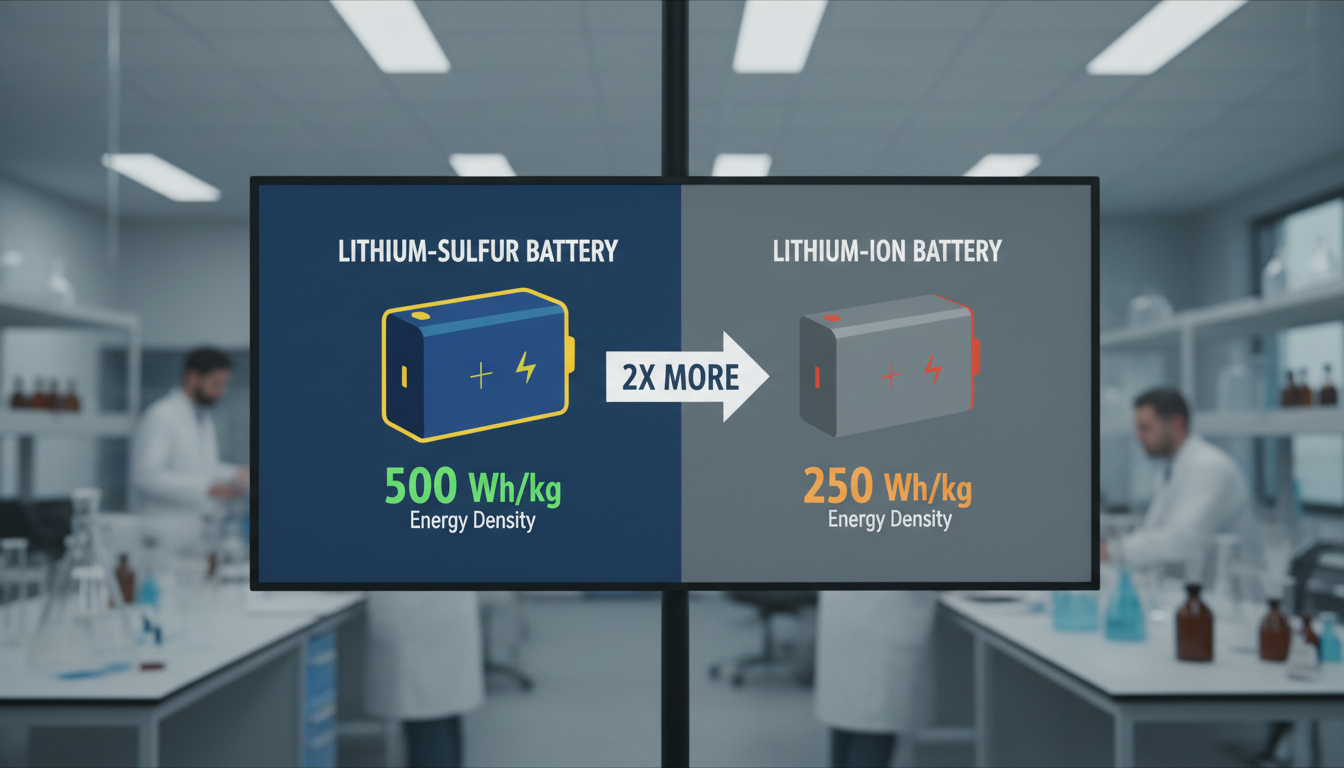
We're watching battery technology transform right before our eyes. While lithium-ion batteries power most of our devices today, a new challenger has entered the arena—and it's pretty exciting. Lithium-sulfur batteries pack roughly 2 to 3 times more energy density than their lithium-ion cousins while using materials that won't break the bank. But before we get ahead of ourselves, let's break down what makes this technology tick and whether it's ready for the spotlight.
What Makes Lithium-Sulfur Battery Different
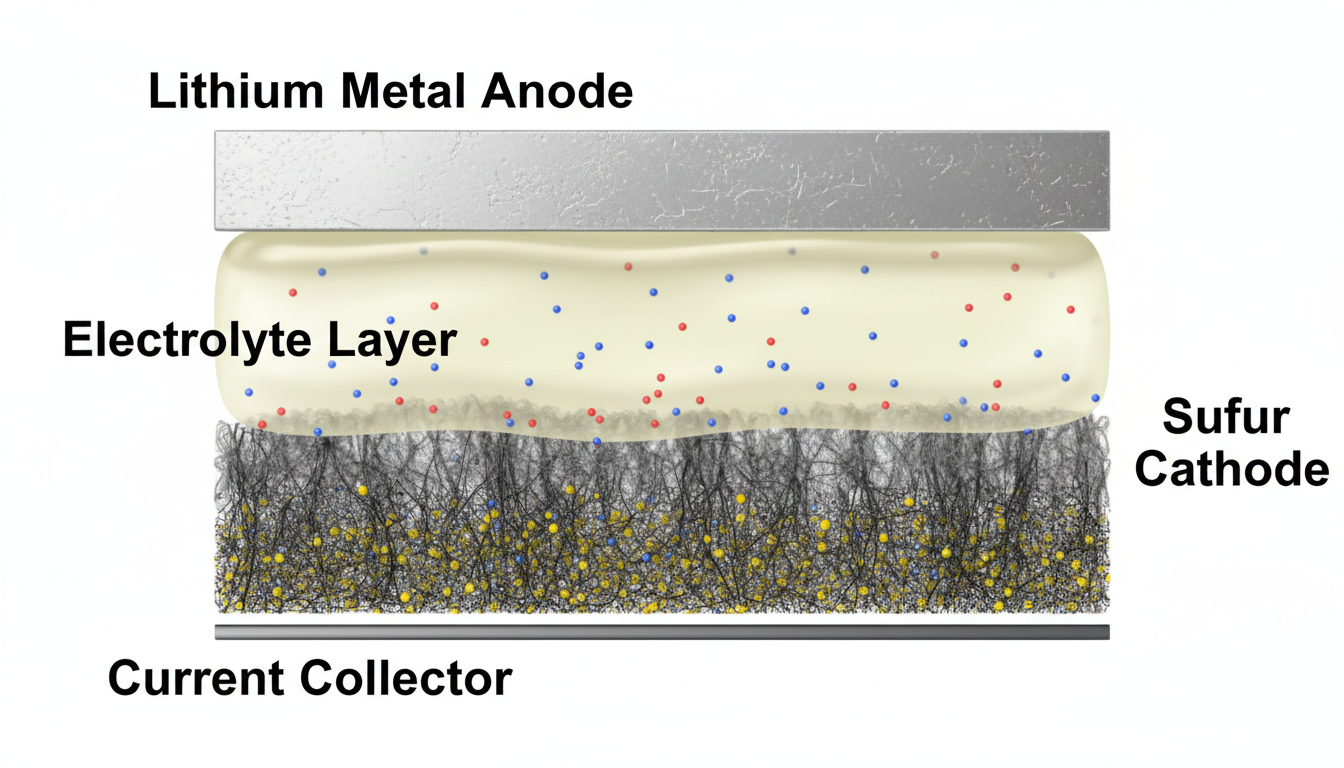
A lithium-sulfur battery uses sulfur as the cathode material and metallic lithium as the anode. This differs from lithium-ion batteries, which rely on compounds like cobalt or nickel at the cathode. The magic happens during discharge when lithium ions migrate from the anode to react with sulfur at the cathode, forming lithium sulfide and releasing energy. This process reverses during charging.
The real kicker? Sulfur is everywhere. It's the 10th most abundant element on Earth, often piling up as a byproduct at oil refineries. Compare that to cobalt—expensive, scarce, and tied to complex supply chains. We're talking about a material that costs about $0.02 per gram versus materials that can run 50 to 100 times that amount.
Energy Density That Actually Matters
Here's where things get interesting. Lithium-sulfur batteries offer a theoretical energy density of around 2,600 Wh/kg. Real-world pouch cells today deliver 300-450 Wh/kg—still double what most lithium-ion batteries achieve (150-250 Wh/kg). Sound familiar if you're tracking ternary lithium developments?
This higher density translates to lighter batteries that store more punch. For electric vehicles, that means extended range without adding weight. For drones and aircraft, it's a game-changer. The UK's Zephyr 6 solar-powered aircraft demonstrated this in 2008 during an 11-day flight powered by lithium-sulfur batteries at night.
The Reality Check: Challenges We're Tackling
Look, we're not sugarcoating this. Lithium-sulfur batteries face some serious hurdles before they're stacked next to lithium-ion on store shelves.
The polysulfide shuttle effect is the biggest headache. During operation, polysulfide compounds dissolve into the electrolyte and migrate between electrodes. This causes active material loss and capacity fade—meaning the battery degrades faster than we'd like. Current cycle life sits around 300-500 cycles compared to 1,000+ for lithium-ion batteries.
Sulfur's poor conductivity (5×10⁻³⁰ S·cm⁻¹ at 25°C) presents another obstacle. Engineers solve this by adding carbon coatings, but that takes up space and reduces overall energy density. Then there's the volume expansion issue—sulfur expands by roughly 80% during charge-discharge cycles, creating mechanical stress that accelerates degradation.
Researchers at Argonne National Laboratory have made progress by developing redox-active interlayers that reduce shuttling while maintaining energy capacity. Their work shows these batteries lasting hundreds of cycles—a step toward commercial viability.
Where Lithium-Sulfur Battery Excels Today
Despite the challenges, we're seeing real adoption in niche markets. Aerospace applications love the weight savings. Sion Power partnered with Airbus Defence and Space to test their technology on high-altitude aircraft. Military vehicles and satellites benefit from the energy density where cycle life matters less than mission duration.
Recent developments signal broader commercialization ahead. In December 2024, Stellantis and Zeta Energy announced a joint development agreement targeting commercial EV batteries around 2030. Lyten plans to build a gigafactory near Reno, Nevada, with 10 GWh annual capacity. These aren't lab experiments—they're serious industrial investments.
For applications where you need maximum energy in minimum weight—think high-altitude drones, specialty vehicles, or backup power systems—lithium-sulfur batteries already make sense. Our cell products showcase how diverse battery applications have become.
Solid-State: The Next Evolution
Solid-state lithium-sulfur batteries represent the technology's future. By replacing liquid electrolytes with solid ones, engineers eliminate the polysulfide shuttle effect and reduce safety risks from flammable liquids. These batteries promise both higher energy density and better safety—exactly what EVs need.
The catch? Solid-state technology faces its own challenges around electrode-electrolyte interfaces and ion conductivity. But the potential payoff is huge. We explored similar advances in our article on solid electrolyte battery technology.
Cost and Environmental Wins
Beyond performance, lithium-sulfur batteries offer two compelling advantages: cost and sustainability. Sulfur's abundance means raw material costs stay low. Unlike batteries dependent on cobalt and nickel—materials with problematic mining practices and volatile pricing—sulfur-based batteries build on stable, widely available resources.
Environmentally, sulfur is non-toxic and doesn't require the resource-intensive extraction processes that cobalt demands. Research suggests lithium-sulfur batteries could reduce greenhouse gas emissions by 31% compared to lithium-ion alternatives.
The Road to 2030
We expect to see lithium-sulfur batteries reach commercial maturity within 5-10 years. Current research focuses on extending cycle life to 800-1,000 cycles and improving practical energy density through high sulfur loading and lean electrolyte operation. Companies are shifting from coin cells in labs to pouch cells for industrial applications.
For low- to mid-range EVs, e-buses, and grid storage, lithium-sulfur technology offers an attractive value proposition. The combination of lower costs and decent energy density fits budget-conscious markets perfectly.
Conclusion
Lithium-sulfur batteries deliver real advantages: 2-3 times the energy density of lithium-ion, lower material costs, lighter weight, and better environmental credentials. The technology faces legitimate challenges around cycle life and the polysulfide shuttle effect, but progress continues steadily. As research addresses these hurdles and manufacturing scales up, we're looking at a technology that could reshape energy storage for EVs, aerospace, and beyond. The batteries powering tomorrow might just run on one of Earth's most common elements.
FAQs
How long do lithium-sulfur batteries last compared to lithium-ion?
Lithium-sulfur batteries currently achieve 300-500 charge cycles, while lithium-ion batteries exceed 1,000 cycles. This shorter lifespan results from the polysulfide shuttle effect causing active material loss. However, recent laboratory advances have pushed some prototypes beyond 800 cycles. Researchers are actively working on extending cycle life through better electrolytes and protective interlayers to match lithium-ion durability.
Are lithium-sulfur batteries safer than lithium-ion batteries?
Yes, lithium-sulfur batteries offer safety advantages. The conversion reaction mechanism reduces the risk of catastrophic failures compared to lithium-ion batteries. Sulfur cathodes are non-flammable, and the batteries can be safely transported in a discharged state via air freight. Solid-state versions eliminate flammable liquid electrolytes entirely, further reducing fire risks. However, lithium metal anodes still require careful engineering to prevent dendrite formation.
What applications currently use lithium-sulfur batteries?
Lithium-sulfur batteries currently power aerospace applications, including high-altitude drones, solar-powered aircraft, and satellites. Military vehicles use them for missions requiring high energy density over extended durations. Recent partnerships between automakers like Stellantis and battery developers target electric vehicle applications by 2030. The technology also shows promise for grid storage and backup power systems where cost matters more than extremely long cycle life.
Why are lithium-sulfur batteries cheaper than lithium-ion?
Sulfur costs approximately $0.02 per gram and ranks as the 10th most abundant element on Earth. It's often a waste product from oil refining. In contrast, lithium-ion batteries require expensive metals like cobalt and nickel with complex supply chains and higher environmental costs. This fundamental material cost difference gives lithium-sulfur batteries a significant economic advantage, potentially reducing battery pack costs substantially once manufacturing scales up.
When will lithium-sulfur batteries be commercially available?
Commercial lithium-sulfur batteries should reach mainstream markets between 2028-2035. Stellantis and Zeta Energy target commercial EV batteries around 2030. Lyten is building a gigafactory in Nevada with production planned within the next few years. While niche applications already use the technology, widespread adoption depends on solving cycle life and manufacturing scalability challenges. Expect to see them first in specialized EVs and aerospace before broader consumer electronics.
Highstar attaches great importance to your personal privacy. When you visit our website, please agree to the use of all cookies. More information about the processing of personal data can be found at "Privacy Policy"


 Buy
Buy