How Lithium-Sulfur Battery Operating Principle Works: A Complete Guide
Related Topics
Learn how lithium-sulfur batteries work through reversible redox reactions. Discover the discharge and charge mechanisms, polysulfide formation, and key advantages of this next-generation energy storage technology.
Follow us on
Lithium-sulfur batteries represent a promising shift in energy storage technology. While lithium-sulfur batteries can achieve a theoretical energy density of 2500 W h kg−1, understanding how they actually work helps us appreciate why they're drawing attention as potential successors to traditional lithium-ion cells.
At Highstar, we've been tracking developments in lithium-sulfur battery technology and believe this chemistry could reshape various industries. The way these batteries operate differs significantly from conventional systems, and the science behind them reveals both exciting possibilities and real challenges.
Basic Battery Components
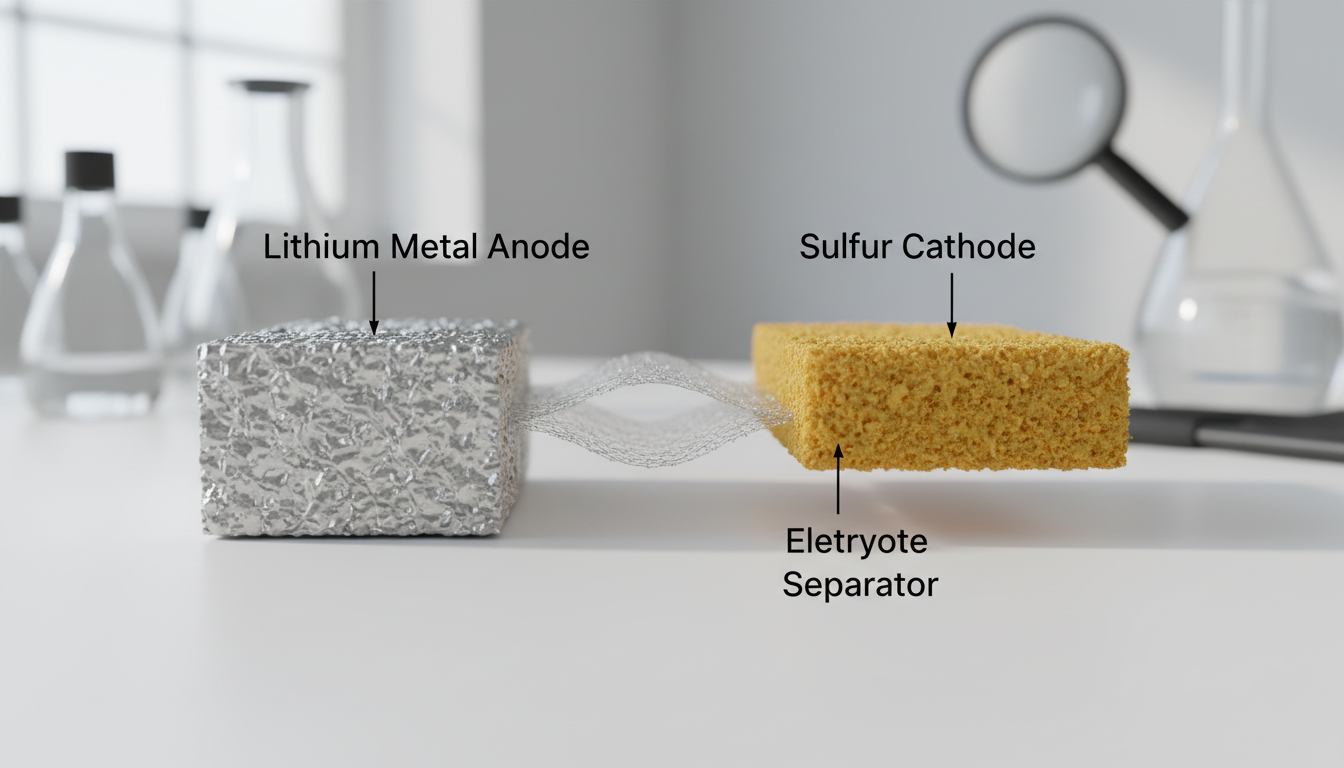
A lithium-sulfur battery is a rechargeable battery that utilizes lithium ions and sulfur in its electrochemical processes. The battery consists of a lithium metal anode, a sulfur-based cathode, and an electrolyte that facilitates the movement of lithium ions between the two electrodes. Unlike our ternary lithium batteries, which use intercalation chemistry, Li-S batteries rely on conversion reactions.
The simplicity of this design—sulfur at one end, lithium metal at the other—contributes to the system's lightweight nature. The low atomic weight of lithium and moderate atomic weight of sulfur means that Li–S batteries are relatively light (about the density of water).
The Discharge Process Explained
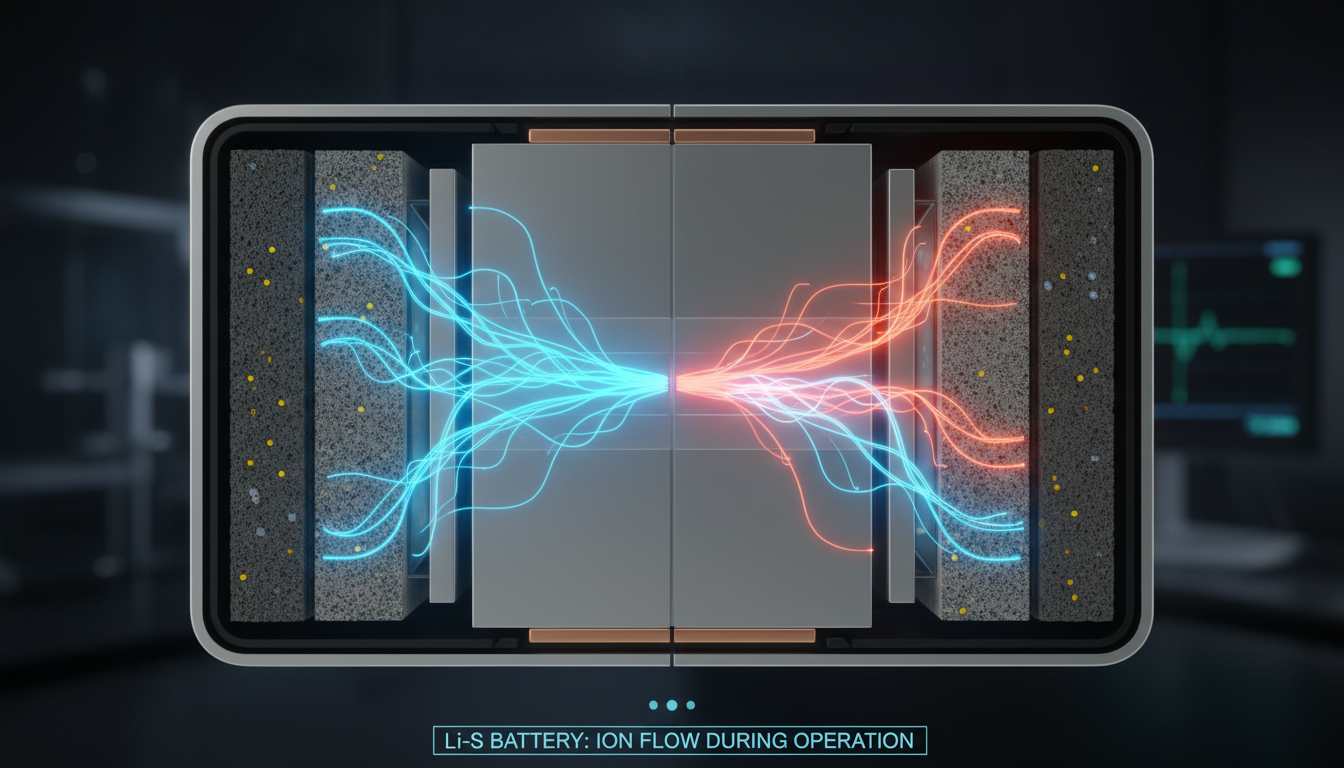
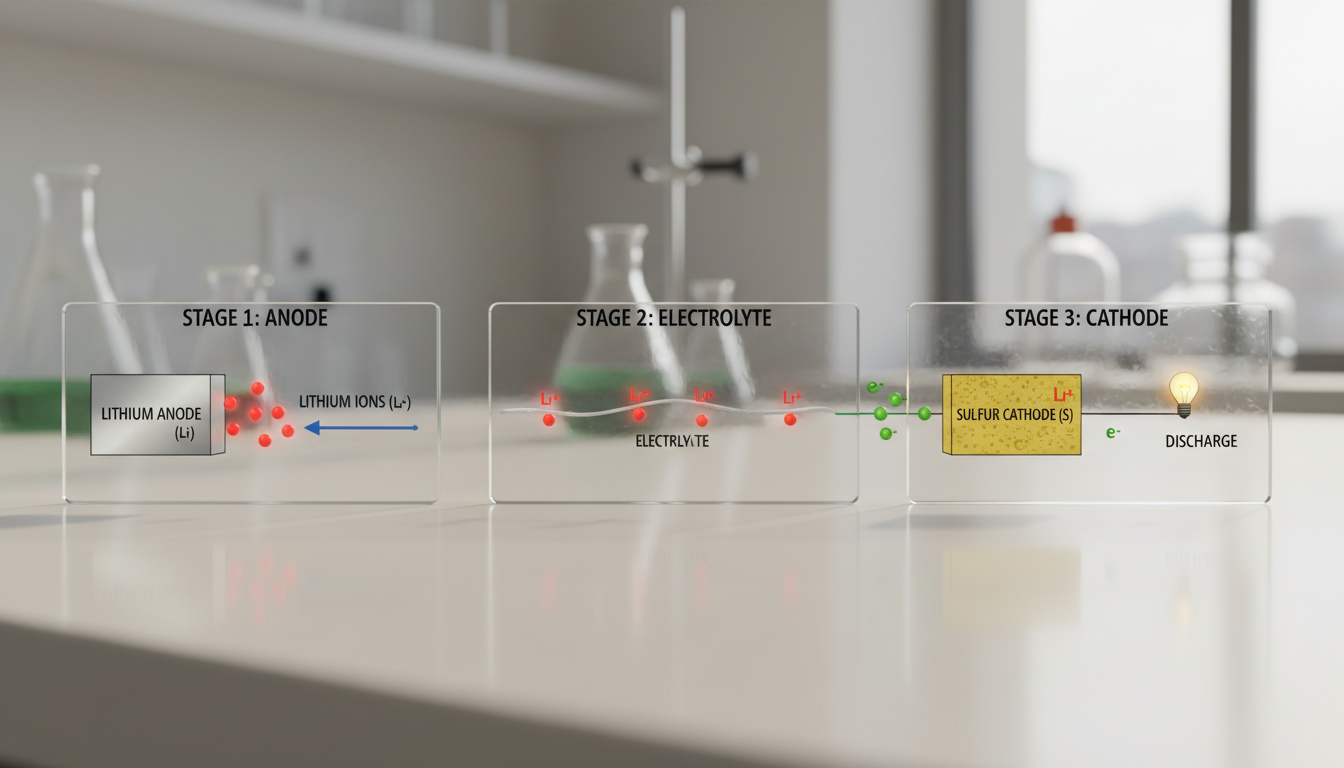
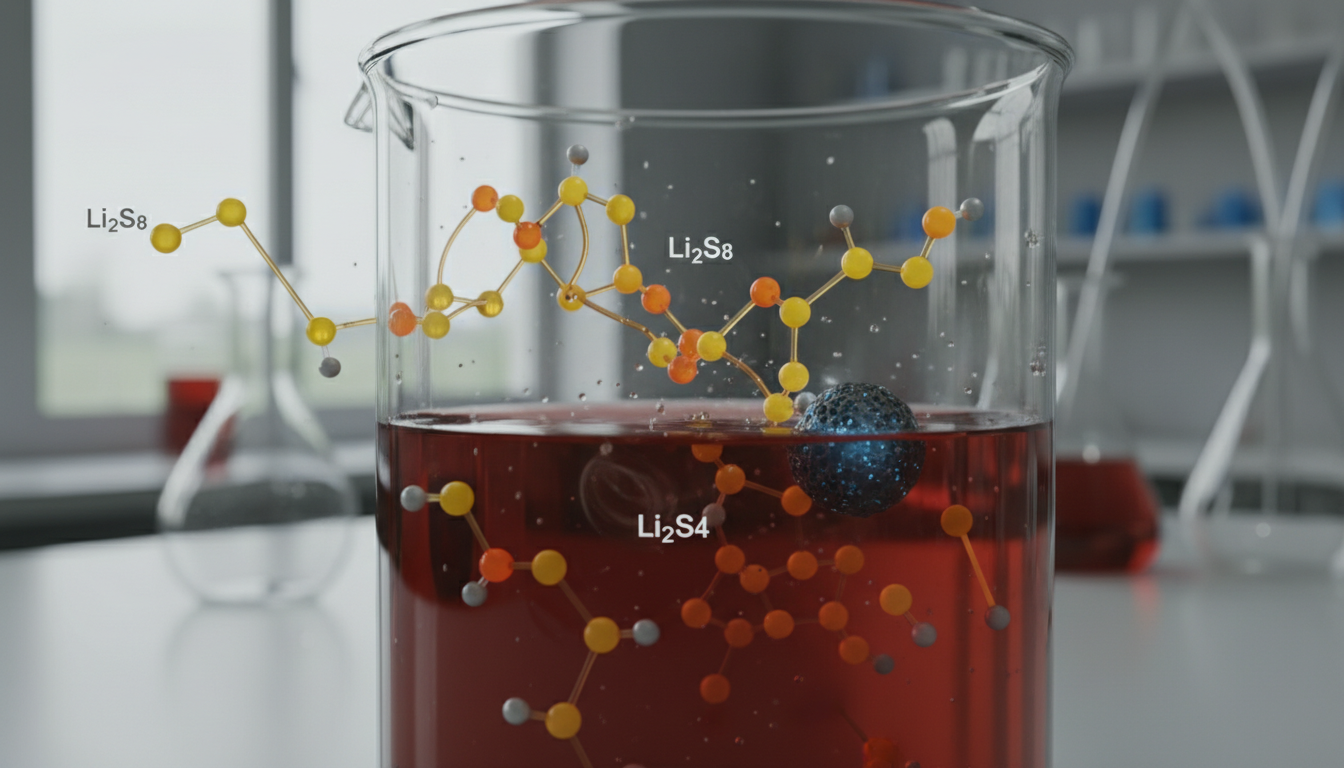
During discharge, the lithium ions in the electrolyte migrate to the cathode where the sulfur is reduced to lithium sulphide (Li2S). But this transformation doesn't happen all at once. During the discharge, the cathode sulfur gradually reduces to polysulfide (Li2Sn, 4 ≤ n ≤ 8) and low-order sulfide (Li2S and Li2S2).
The process follows a sequence: S8 → Li2S8–4 → Li2S2/Li2S. At the anode, metallic lithium dissolves and releases lithium ions that travel through the electrolyte. The lithium ion moves to the sulfur positive pole and reacts with sulfur to form polysulfide ion (Li2Sx).
This multi-step reduction creates the characteristic two-plateau voltage profile you'll see in Li-S discharge curves. A typical discharge profile of the lithium–sulfur battery has two discharge plateaus at 2.3 and 2.1 V, which represent the conversions of S8 to Li2S4 and Li2S4 to Li2S, respectively.
How Charging Reverses the Reaction
During charging, the process is reverted, with lithium ions released into the electrolyte and Li2S reconverted into intermediate lithium polysulfides, followed by the formation of the original S8 product. The battery essentially retraces its steps backward.
During charge, the polysulfide ion decomposes, and the lithium ion returns to the negative pole. This reversible cycle is what makes the battery rechargeable. Li+ is released from Li2S to participate in the electrolyte during the charging process, and is converted into LiPSs during the reversible redox reaction with sulfur, and then electrons are obtained to become metal Li, and sulfur becomes S8, and finally the reversible cycle is realized.
The Polysulfide Formation Challenge
One thing that makes Li-S batteries different is the formation of soluble intermediate species. While S and Li 2S are relatively insoluble in most electrolytes, many intermediate polysulfides are not. These dissolved polysulfides create what's known as the shuttle effect.
They are formed and leaked from the cathode and they diffuse to the anode, where they are reduced to short-chain polysulfides and diffuse back to the cathode where long-chain polysulfides are formed again. This process results in the continuous leakage of active material from the cathode, lithium corrosion, low coulombic efficiency and low battery life.
This shuttling represents one of the main barriers to commercial deployment. One of the primary factors limiting the lifespan of Li-S batteries is the dissolution of polysulfides in the electrolyte, which leads to the shuttle effect and results in capacity loss over time.
Energy Density Advantages
The theoretical numbers are compelling. When paired with lithium metal, it can offer a high theoretical specific capacity of 1675 mA h g−1 – one of the highest among solid cathode materials. Real-world performance, though, falls short of these theoretical limits.
Li–S batteries have a high theoretical specific energy (≈2600 Wh/kg for the Li/S redox chemistry), but practical cell-level specific energies in pouch-cell formats are typically ~300–450 Wh/kg today; values above ~400 Wh/kg generally require high sulfur loading, lean-electrolyte operation, and limited excess lithium. Even at these practical levels, the energy density surpasses many conventional lithium-ion systems.
Material and Cost Benefits
Sulfur is a widely available, inexpensive, and environmentally friendly element. This abundance translates to potential cost savings. With sulfur replacing expensive transition metals (i.e., cobalt) and other toxic compounds, lithium-sulfur batteries could be a cheaper, lighter, and potentially safer technology.
Compared to the materials used in our power battery cells and energy storage cells, sulfur eliminates dependence on rare or conflict minerals. This makes the supply chain more stable and environmentally conscious.
Current Performance Limitations
Sulfur is very cheap, but has practically no electroconductivity, 5×10⁻³⁰ S⋅cm−1 at 25 °C. This poor conductivity means pure sulfur cathodes won't work—they need conductive carbon additives mixed in.
Volume expansion presents another issue. When the sulfur in the cathode absorbs lithium, volume expansion of the LixS compositions occurs, and predicted volume expansion of Li2S is nearly 80% of the volume of the original sulfur. This dramatic swelling and contraction during cycling stresses the cathode structure.
Cycle life remains limited compared to mature lithium-ion technology. Li–S batteries with up to 1,500 charge and discharge cycles were demonstrated in 2017, but cycle life tests at commercial scale and with lean electrolyte have not been completed.
Real-World Applications Emerging
Despite challenges, some companies are making progress. The drone is powered by lithium-sulfur batteries with a specific energy of 410 W h kg−1 and expects to begin commercial production in 2025. Applications where weight matters most—aerospace, drones, and high-altitude platforms—are logical starting points.
For applications requiring both high energy density and long cycle life, more development work is needed. The technology shows promise but hasn't reached the maturity level of conventional systems yet.
Conclusion
The operating principle of lithium-sulfur batteries—based on reversible redox reactions between lithium and sulfur through multiple polysulfide intermediates—offers theoretical advantages in energy density and cost. The discharge process reduces elemental sulfur through long-chain and short-chain polysulfides to lithium sulfide, while charging reverses this sequence.
Key challenges include managing the polysulfide shuttle effect, accommodating volume changes, and improving electrical conductivity. While practical energy densities of 300-450 Wh/kg have been achieved, the technology needs further refinement for widespread commercial adoption. As research continues addressing these obstacles, Li-S batteries could eventually complement or replace lithium-ion systems in weight-sensitive applications.
FAQs
What is the main operating principle of lithium-sulfur batteries?
Lithium-sulfur batteries operate through reversible electrochemical redox reactions between metallic lithium at the anode and elemental sulfur at the cathode. During discharge, lithium ions migrate through the electrolyte to react with sulfur, forming various polysulfide intermediates before ultimately creating lithium sulfide. The process reverses during charging, converting lithium sulfide back to elemental sulfur.
Why do lithium-sulfur batteries have higher energy density than lithium-ion?
The energy density advantage comes from the direct use of metallic lithium as the anode rather than intercalation compounds, and sulfur's ability to host two lithium ions per atom. This allows lithium-sulfur batteries to achieve theoretical energy densities around 2600 Wh/kg, compared to 150-250 Wh/kg for typical lithium-ion batteries. Sulfur is also much lighter than transition metal oxides used in lithium-ion cathodes.
What is the polysulfide shuttle effect in Li-S batteries?
The shuttle effect occurs when intermediate polysulfide compounds (Li2Sx) dissolve in the electrolyte and migrate between the cathode and anode. These dissolved species continuously shuttle back and forth, causing active material loss from the cathode, corroding the lithium anode, and reducing battery efficiency and lifespan. This remains one of the primary challenges preventing commercial deployment of lithium-sulfur technology.
What are the voltage plateaus in lithium-sulfur discharge curves?
Lithium-sulfur batteries typically show two distinct voltage plateaus during discharge—one around 2.3V and another around 2.1V. The first plateau represents the conversion of elemental sulfur (S8) to long-chain polysulfides (Li2S4), while the second plateau corresponds to further reduction of these polysulfides to lithium sulfide (Li2S). This two-stage process reflects the multi-step electrochemical reactions occurring in the battery.
How many charge-discharge cycles can lithium-sulfur batteries achieve?
Current lithium-sulfur batteries have achieved up to 1,500 charge-discharge cycles in laboratory demonstrations, though typical performance ranges from 200-500 cycles. This is considerably lower than mature lithium-ion batteries, which often exceed 2,000 cycles. The limited cycle life stems primarily from the polysulfide shuttle effect and volume expansion issues, which researchers are actively working to address through advanced cathode designs and electrolyte modifications.
Highstar attaches great importance to your personal privacy. When you visit our website, please agree to the use of all cookies. More information about the processing of personal data can be found at "Privacy Policy"


 Buy
Buy