Lithium-Sulfur Battery: The Next Generation of Energy Storage Technology
Related Topics
Discover how lithium-sulfur batteries offer 2X energy density vs lithium-ion, lower costs, and sustainability. Learn about the technology, applications, and challenges.
Follow us on
We're seeing a major shift in battery technology, and lithium-sulfur batteries are at the center of this change. While we've relied on lithium-ion technology for years, the demand for higher energy density, lower costs, and more sustainable materials is pushing researchers and manufacturers to explore better options. That's where lithium-sulfur comes in.
Lithium-sulfur batteries offer something we haven't been able to get from traditional batteries: a theoretical energy density of about 2,600 Wh/kg, which is roughly five times higher than what we see in lithium-ion batteries. Plus, sulfur is cheap, abundant, and doesn't require mining operations that destroy ecosystems or exploit workers. If you're in the market for next-generation energy storage—whether for electric vehicles, drones, or grid applications—it's time to get familiar with this technology.
At Highstar, we've been tracking battery innovations for years, and we know how fast things are moving. We've covered everything from LFP batteries to ternary lithium technology, and lithium-sulfur is the next big thing we're watching closely.
What Is a Lithium-Sulfur Battery?
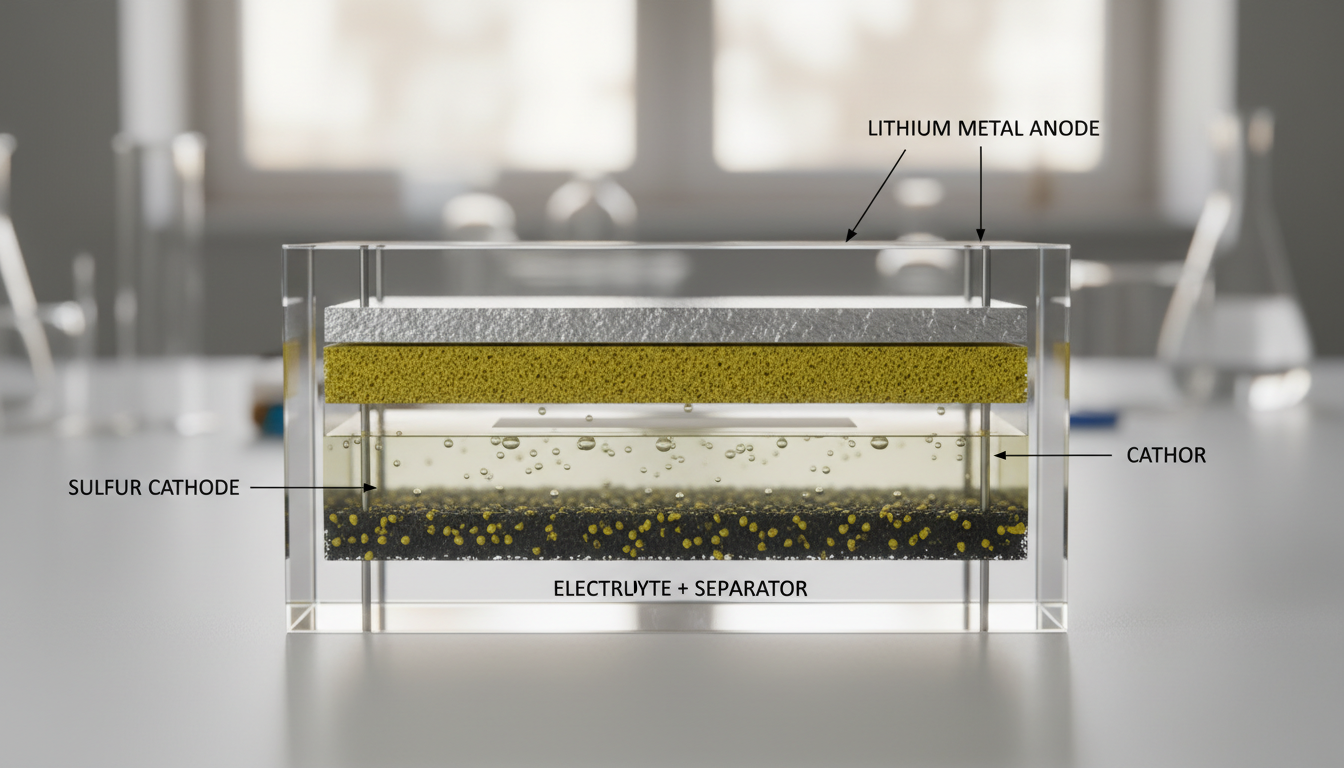
A lithium-sulfur battery is a rechargeable battery that uses lithium metal as the anode and elemental sulfur as the cathode. Unlike lithium-ion batteries, which rely on intercalation (where lithium ions move between layers of materials), lithium-sulfur batteries work through a conversion mechanism. During discharge, lithium ions react with sulfur to form lithium sulfide compounds, releasing energy. When you charge the battery, this process reverses.
This conversion mechanism is what gives lithium-sulfur batteries their edge. Each sulfur atom can host two lithium ions, compared to only 0.5 to 0.7 lithium ions per host atom in traditional lithium-ion batteries. That's a huge difference when we're talking about energy capacity. The chemistry is straightforward: sulfur is reduced to lithium polysulfides during discharge, and eventually forms Li₂S. When charging, sulfur is regenerated.
What makes sulfur so attractive isn't just its chemistry—it's the economics. Sulfur is the 16th most abundant element on Earth and is often a byproduct of oil and gas refining. We're literally sitting on mountains of it at fossil fuel plants around the world. It's cheap, plentiful, and non-toxic, which means we can build batteries without relying on expensive and ethically problematic materials like cobalt.
How Does Lithium-Sulfur Battery Technology Work?
The basic working principle of a lithium-sulfur battery involves a sulfur cathode, a lithium metal anode, and an electrolyte that allows ions to move between them. During discharge, lithium ions migrate from the anode through the electrolyte to the cathode, where they react with sulfur. This reaction forms a series of intermediate compounds called lithium polysulfides (Li₂Sₓ, where x ranges from 2 to 8) before eventually forming the final discharge product, lithium sulfide (Li₂S).
The discharge process happens in multiple steps. First, elemental sulfur (S₈) is reduced to long-chain polysulfides (Li₂S₆ to Li₂S₈). These polysulfides are soluble in most electrolytes, which causes one of the biggest problems we'll discuss later. As the discharge continues, the long-chain polysulfides are further reduced to short-chain polysulfides (Li₂S₂ and Li₂S). This final stage produces solid, insoluble compounds that deposit on the cathode.
When we charge the battery, the process reverses. The solid lithium sulfides are oxidized back to elemental sulfur, and lithium ions return to the anode. The theoretical voltage of a lithium-sulfur battery is around 2.15 V, which is lower than the 3.6-3.7 V we see in lithium-ion batteries, but the high capacity of sulfur more than makes up for it.
One thing to note: the electrolyte used in lithium-sulfur batteries is typically ether-based, such as DOL (1,3-dioxolane) or DME (dimethoxyethane), often with additives like LiNO₃. These electrolytes are different from the carbonate-based electrolytes used in lithium-ion batteries, and they play a big role in battery performance and safety.
Advantages of Lithium-Sulfur Batteries
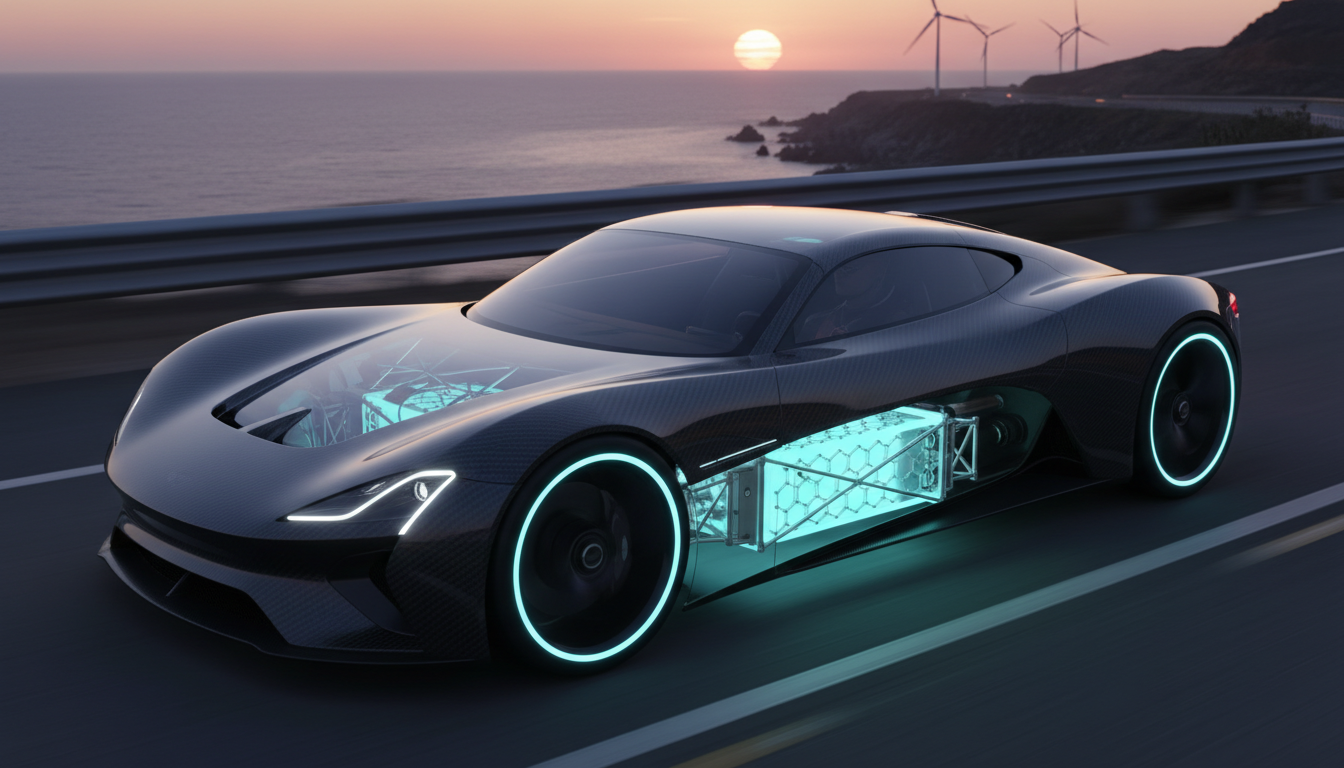
Lithium-sulfur batteries bring several game-changing benefits to the table. First and foremost is energy density. With a theoretical specific energy of 2,600 Wh/kg, they blow lithium-ion batteries out of the water. In practice, we're seeing pouch cells today delivering 300-450 Wh/kg, with some prototypes pushing above 500 Wh/kg. That's still double what you'd get from most lithium-ion batteries.
Next up: cost. Sulfur is dirt cheap compared to cobalt, nickel, or manganese. We're talking about a material that's often considered industrial waste. Companies like Lyten and Zeta Energy estimate that lithium-sulfur batteries could have up to 60% lower carbon footprint and significantly reduced production costs compared to the best lithium-ion batteries on the market today.
Weight is another huge advantage. Both lithium and sulfur are lightweight elements, which means the batteries themselves are lighter. For electric vehicles, drones, and aircraft, every kilogram matters. Lyten claims their lithium-sulfur batteries can achieve up to 50% weight reduction compared to NMC batteries and up to 75% weight reduction compared to LFP batteries. That translates directly into longer range and better performance.
There's also the sustainability factor. Sulfur doesn't require destructive mining operations or exploitative labor practices. It's abundant, locally available in many regions, and can be sourced as a byproduct of existing industrial processes. This makes lithium-sulfur batteries a more ethical and environmentally friendly option. Plus, recycling is simpler because you're dealing with fewer toxic heavy metals.
Finally, lithium-sulfur batteries are safer in some respects. The sulfur cathode is non-flammable, which reduces the risk of thermal runaway—the catastrophic failure mode we sometimes see in lithium-ion batteries. While there are still safety challenges (like lithium dendrite formation), the overall risk profile looks better.
Challenges Facing Lithium-Sulfur Batteries
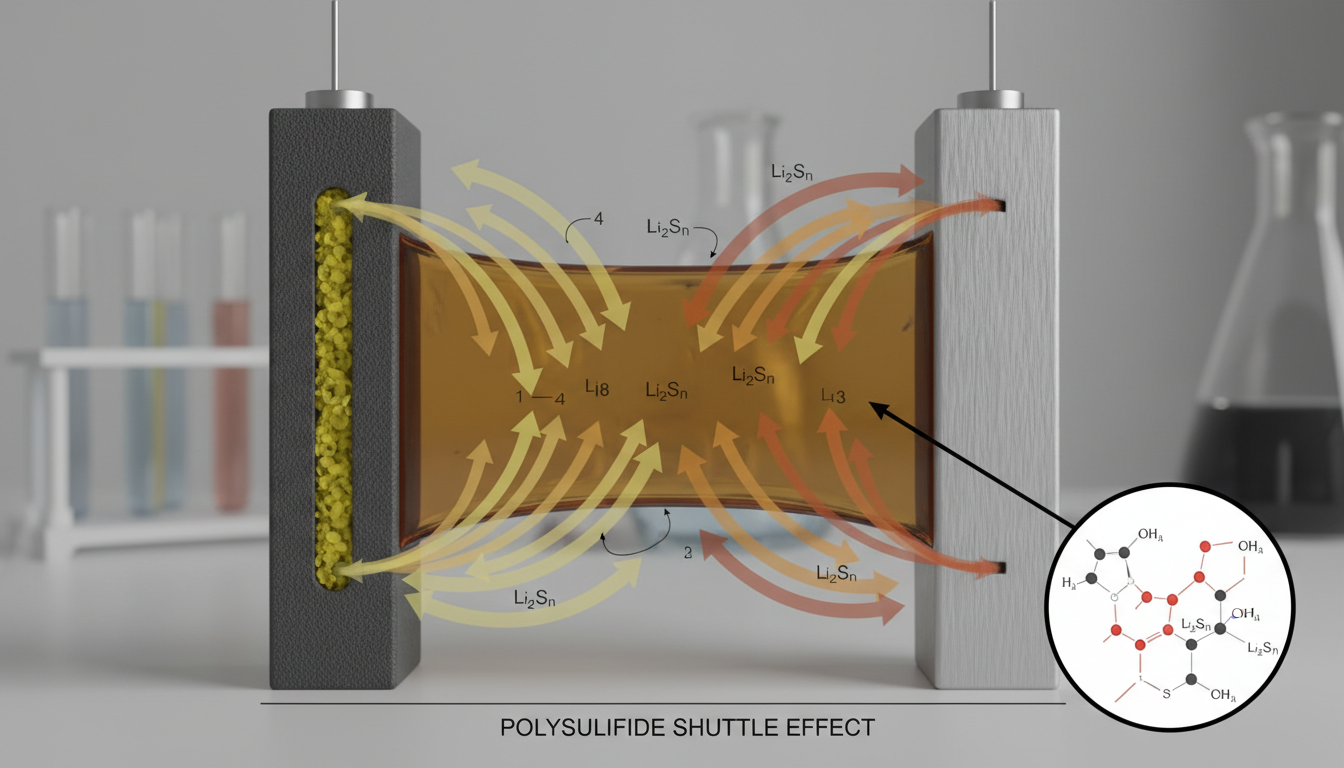
As promising as lithium-sulfur batteries are, they're not ready to replace lithium-ion just yet. The biggest problem is something called the polysulfide shuttle effect. During discharge, intermediate polysulfides dissolve into the electrolyte and migrate to the lithium anode, where they get reduced to short-chain polysulfides. These then migrate back to the cathode, where they're oxidized again. This back-and-forth "shuttling" causes continuous loss of active material, leading to low coulombic efficiency, self-discharge, and rapid capacity fade.
Another major issue is poor electrical conductivity. Elemental sulfur is an insulator with a conductivity of about 5×10⁻³⁰ S·cm⁻¹ at 25°C. The discharge products—Li₂S and Li₂S₂—are also insulators. This means you need to add a lot of conductive carbon to the cathode, which reduces the overall energy density of the battery.
Volume expansion is another headache. When sulfur converts to lithium sulfide during discharge, the volume can expand by up to 80%. This massive expansion damages the cathode structure, breaks electrical contacts, and causes rapid degradation. It's like trying to fit an inflated balloon back into its original package—things get messy.
Then there's the lithium metal anode. Using pure lithium metal is great for energy density, but it's also reactive and prone to forming dendrites—tiny needle-like structures that can grow through the separator and cause short circuits. This is a safety risk and a major cause of battery failure.
Finally, cycle life is still a problem. While researchers have demonstrated lithium-sulfur batteries with over 1,000 cycles in the lab, that's under ideal conditions with excess electrolyte and lithium. In practical pouch cells with lean electrolyte and limited lithium, cycle life drops significantly. Most lithium-sulfur batteries today last only 300-500 cycles, compared to 1,000+ for lithium-ion.
The Polysulfide Shuttle Effect Explained
Let's dive deeper into the polysulfide shuttle effect because it's the main thing holding lithium-sulfur batteries back. When sulfur is reduced during discharge, it forms a series of soluble polysulfides with the general formula Li₂Sₓ (where x = 6-8 for long-chain polysulfides and x = 2-4 for short-chain polysulfides). The long-chain polysulfides are highly soluble in typical ether-based electrolytes.
Once dissolved, these polysulfides can freely move through the electrolyte. When they reach the lithium anode, they react with it, forming short-chain polysulfides and corroding the lithium surface. These short-chain polysulfides then migrate back to the cathode, where they're oxidized back to long-chain polysulfides. This creates a continuous cycle—a "shuttle"—that wastes energy and degrades the battery.
The shuttle effect has several nasty consequences. First, it reduces coulombic efficiency because you're constantly losing energy to these parasitic reactions. Second, it causes self-discharge, meaning the battery loses charge even when it's not being used. Third, it leads to the buildup of insulating layers on both electrodes, which increases resistance and reduces performance. Finally, it causes irreversible loss of sulfur from the cathode, which means your battery capacity fades fast.
Researchers have tried several strategies to combat the shuttle effect. One approach is to physically trap sulfur in porous carbon structures, preventing polysulfides from escaping. Another is to use polar materials like metal oxides or polymers that chemically bind to polysulfides. Functional separators with coatings that block polysulfide migration have also shown promise. Some teams are even developing solid-state lithium-sulfur batteries that eliminate the liquid electrolyte entirely, which would stop the shuttle effect dead in its tracks.
Lithium-Sulfur vs Lithium-Ion Batteries
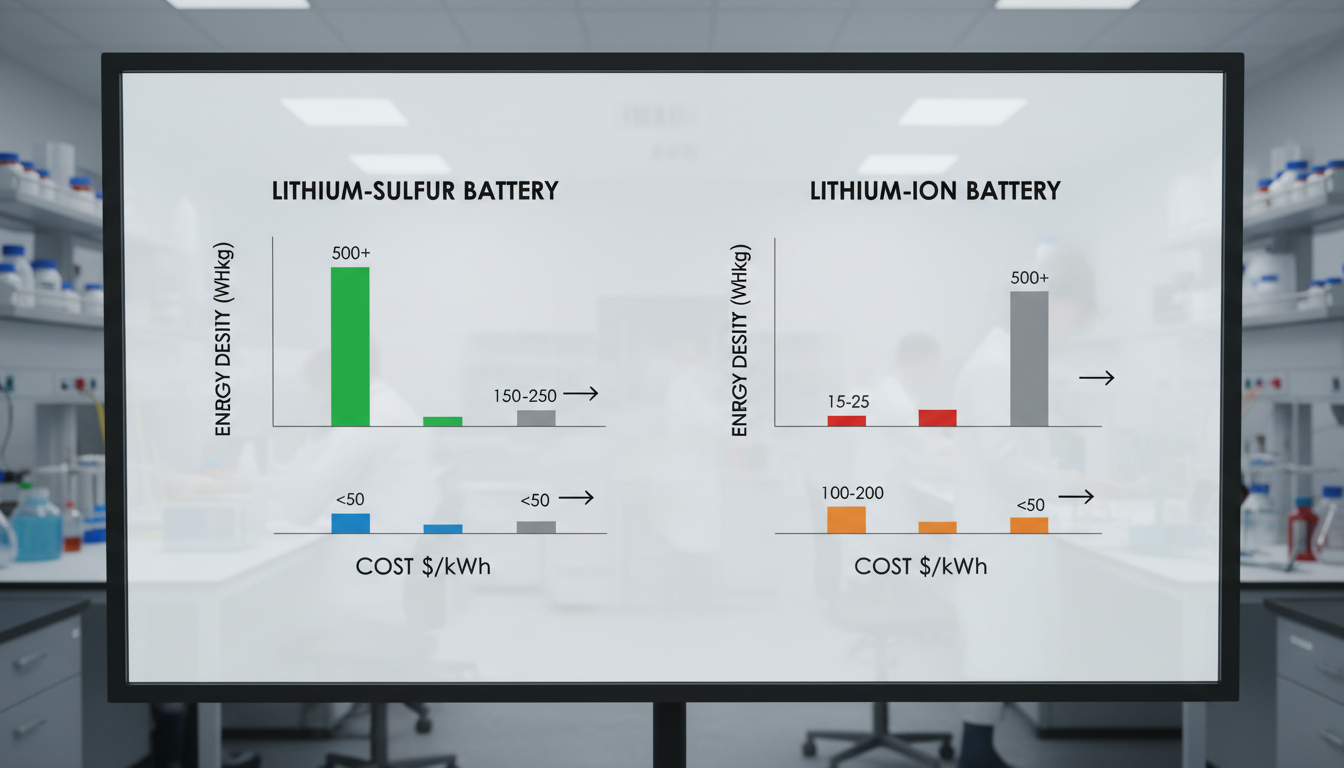
So how do lithium-sulfur batteries stack up against the current champion, lithium-ion? Let's break it down. In terms of energy density, lithium-sulfur wins hands down. Theoretical energy density is 2,600 Wh/kg for lithium-sulfur versus about 250 Wh/kg for lithium-ion. Even in practice, lithium-sulfur batteries are delivering 300-500 Wh/kg, which is significantly higher.
Cost is another area where lithium-sulfur has the advantage. Sulfur is cheap and abundant, while lithium-ion batteries require expensive materials like cobalt and nickel. This cost difference could be huge when we're talking about scaling up production for electric vehicles and grid storage.
However, cycle life is where lithium-ion still has the edge. A good lithium-ion battery can last 1,000-2,000 cycles or more, while most lithium-sulfur batteries today are struggling to hit 500 cycles. This shorter lifespan is a major barrier to commercialization, especially for applications like electric vehicles where batteries need to last for years.
Safety is a mixed bag. Lithium-sulfur batteries have a non-flammable sulfur cathode, which is good, but they also use reactive lithium metal anodes, which is bad. Lithium-ion batteries have a proven safety track record, though they can still experience thermal runaway under certain conditions.
In terms of chemistry, the two technologies are fundamentally different. Lithium-ion batteries use an intercalation mechanism, where lithium ions are stored between layers of the electrode materials. Lithium-sulfur batteries use a conversion mechanism, where sulfur reacts directly with lithium to form new compounds. This difference gives lithium-sulfur its high capacity but also creates the polysulfide shuttle problem.
Voltage is another difference. Lithium-sulfur batteries operate at around 2.15 V, while lithium-ion batteries are typically 3.6-3.7 V. This means you need more cells in series to achieve the same voltage, which adds complexity to battery pack design.
Applications for Lithium-Sulfur Batteries
Despite the challenges, lithium-sulfur batteries are already finding their way into real-world applications, especially where high energy density and lightweight design are more valuable than long cycle life. Drones and UAVs are perfect candidates. Lyten announced in 2024 that they're delivering lithium-sulfur batteries for defense applications, and companies like Zeta Energy are working with automakers like Stellantis to develop EV batteries.
Aviation is another big opportunity. NASA has been developing solid-state lithium-sulfur batteries for electric aircraft through their SABERS program, with energy densities over 500 Wh/kg. The weight savings from lithium-sulfur batteries could make electric aviation viable for short-haul flights. Airbus has already tested lithium-sulfur batteries from Sion Power on their High Altitude Pseudo-Satellite (HAPS) aircraft, which flew for 11 days straight.
Electric vehicles are the ultimate prize. With ranges limited by battery weight and cost, a lighter, cheaper battery with higher energy density would be a game-changer. Lyten is targeting commercial EV batteries by 2024-2025, and Stellantis announced a joint development agreement with Zeta Energy in 2024, aiming for commercial use around 2030. The goal is to eliminate nickel and cobalt entirely while delivering better performance.
Other applications include satellites, portable electronics, and grid-scale energy storage. Anywhere weight matters or where short-term, high-power applications are needed, lithium-sulfur batteries could shine. They're also being explored for micromobility (e-bikes, scooters) and mobile equipment.
Recent Breakthroughs in Lithium-Sulfur Technology
The field is moving fast, and there have been some major breakthroughs recently. In 2024, Lyten announced plans to build a lithium-sulfur gigafactory near Reno, Nevada, with a capacity of up to 10 GWh annually. This is a huge step toward commercialization. Stellantis and Zeta Energy also announced a joint development agreement in December 2024, targeting cost savings by eliminating nickel and cobalt.
On the research front, scientists at Argonne National Laboratory developed a redox-active interlayer that reduces the polysulfide shuttle effect while improving battery capacity and cycle life. This work, published in Nature Communications, represents a big step forward in solving one of the technology's biggest problems.
Other innovations include graphene-based cathodes, which improve conductivity and suppress polysulfide dissolution. NASA's SABERS program has achieved energy densities over 500 Wh/kg using graphene cathodes and solid-state electrolytes. Researchers are also exploring sulfurized polyacrylonitrile (SPAN) cathodes, which eliminate the polysulfide shuttle effect entirely by chemically bonding sulfur to a carbon backbone.
Data-driven approaches are also playing a role. A 2024 study in Nature Communications analyzed 866 galvanostatic cycling plots from recent research to identify patterns and best practices for designing practical lithium-sulfur batteries. This kind of systematic analysis is helping researchers move from lab-scale coin cells to practical pouch cells.
Frequently Asked Questions (FAQs)
What makes lithium-sulfur batteries better than lithium-ion? Lithium-sulfur batteries offer up to 5X higher theoretical energy density (2,600 Wh/kg vs ~250 Wh/kg), lower costs due to cheap sulfur, and a smaller environmental footprint without nickel or cobalt.
Why aren't lithium-sulfur batteries used everywhere yet? The main challenges are the polysulfide shuttle effect (which causes rapid capacity fade), poor electrical conductivity of sulfur, volume expansion during cycling, and shorter cycle life (300-500 cycles vs 1,000+ for lithium-ion).
Can lithium-sulfur batteries replace lithium-ion in electric vehicles? Yes, but not immediately. Companies like Stellantis and Zeta Energy are targeting 2028-2030 for commercial EV applications. Lithium-sulfur batteries need improvements in cycle life and safety before they can fully replace lithium-ion.
How long do lithium-sulfur batteries last? Current lithium-sulfur batteries typically last 300-500 charge-discharge cycles, though some prototypes have achieved over 1,000 cycles in lab conditions. This is shorter than lithium-ion batteries, which often exceed 1,000-2,000 cycles.
Are lithium-sulfur batteries safe? Lithium-sulfur batteries have a non-flammable sulfur cathode, which improves safety, but they use reactive lithium metal anodes that can form dendrites and pose short-circuit risks. Overall, they have different safety challenges compared to lithium-ion but show promise with proper design.
Highstar attaches great importance to your personal privacy. When you visit our website, please agree to the use of all cookies. More information about the processing of personal data can be found at "Privacy Policy"


 Buy
Buy