Ionic Conductivity: How Smoothly Lithium Ions Move in Your Battery
Related Topics
Discover ionic conductivity – the key indicator of lithium-ion movement in batteries. Learn how it affects performance, charging speed, and battery life.
Follow us on
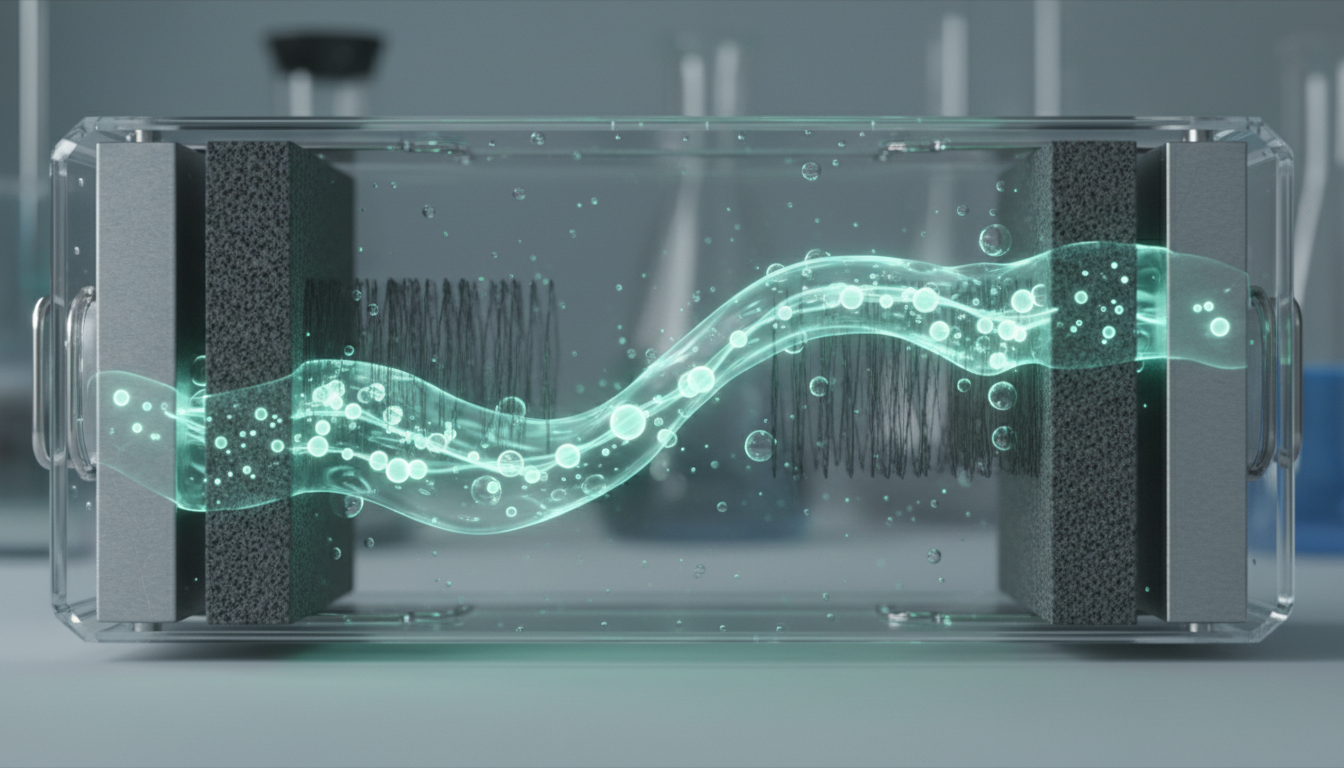
Lithium-ion batteries power nearly everything we use today, from smartphones to electric vehicles. But have you ever wondered what makes these batteries tick? At the heart of battery performance lies a measurement called ionic conductivity – the indicator of how smoothly lithium ions can move through your battery. Think of it like traffic flow on a highway: the smoother and faster the ions move, the better your battery performs.
We're going to break down what ionic conductivity really means, why it matters for your devices, and how battery makers like Highstar are pushing the boundaries to create batteries that charge faster and last longer. Whether you're curious about the science or just want to know why your phone charges the way it does, this guide has you covered.
What Is Ionic Conductivity?
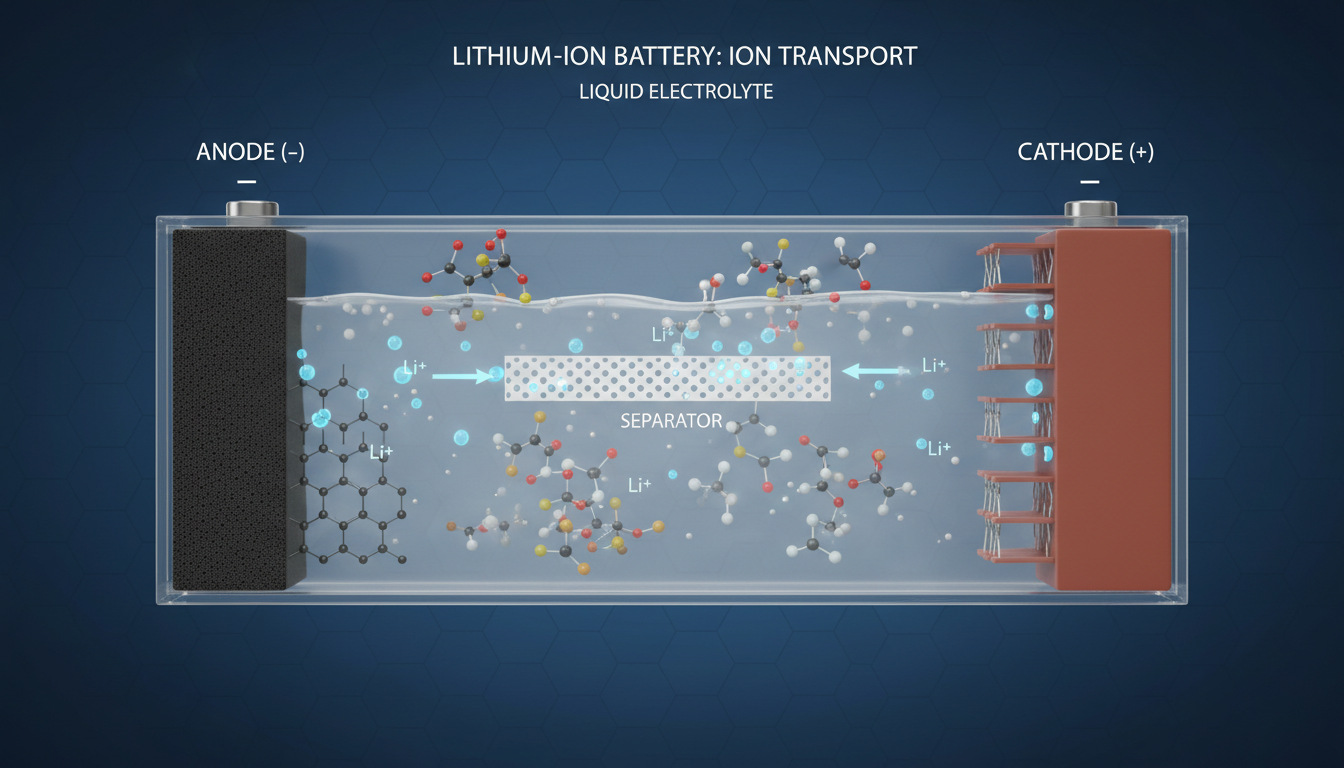
In most non-aqueous lithium-ion conducting electrolyte solutions, the maximum bulk conductivity occurs at an approximately 1 M salt concentration. Ionic conductivity is basically a measure of how easily charged particles (in this case, lithium ions) can zip through the electrolyte inside your battery. The electrolyte is the liquid or solid material that sits between the positive and negative sides of the battery, acting as a highway for these ions.
Typical conductivities of liquid electrolyte at room temperature are in the range of 10 mS/cm. When you charge or use your device, lithium ions need to travel back and forth between the electrodes. The faster and more efficiently they move, the quicker your battery charges and the more power it can deliver when you need it. Poor ionic conductivity is like having a traffic jam – everything slows down, your battery takes forever to charge, and you might not get the performance you expect.
Understanding this concept helps explain why some batteries work better in cold weather, why fast-charging technology exists, and what researchers are doing to make tomorrow's batteries even better. The electrolyte's job is to create a smooth pathway for lithium-ion transport, and understanding the electrode-binder structure plays a role in optimizing this process.
Key Properties That Qualify Electrolytes to Serve as Lithium-Ion Pathways: Lithium Salts, Solvents, and Additives
In a lithium-ion battery, the electrolyte enables the smooth transport of lithium ions. The electrolyte used in lithium-ion batteries is in liquid form to enhance ion conductivity and consists of lithium salts, organic solvents, and additives. These three components work together like a well-oiled machine.
Lithium salts are the source of the ions themselves. Liquid electrolytes in lithium-ion batteries consist of lithium salts, such as LiPF6, LiBF4 or LiClO4 in an organic solvent. These salts break apart in the solvent to create the free-moving lithium ions that carry charge through the battery.
Organic solvents do the heavy lifting by dissolving these salts and providing a medium for ion movement. Cyclic carbonates can effectively dissolve lithium salts with their high dielectric constant, allowing cations and anions to separate easily. However, their high viscosity can slow down the movement of lithium ions. To address this issue, low-viscosity chain carbonates such as DEC, EMC, or DMC are blended in. It's all about finding the right balance between dissolving power and flow.
Additives might seem like minor players, but they're game-changers. Additives are incorporated to support battery performance and safety across various aspects including electrolyte stability, ionic conductivity, and interfacial properties. Although they represent only 5% of the electrolyte, they account for 40% of its cost. These tiny amounts of special chemicals can dramatically improve how long your battery lasts and how safely it operates. For those interested in advanced materials, ternary lithium battery technology represents one of the cutting-edge applications of these principles.
How Smoothly Lithium Ions Move: Factors Affecting Ion Transport
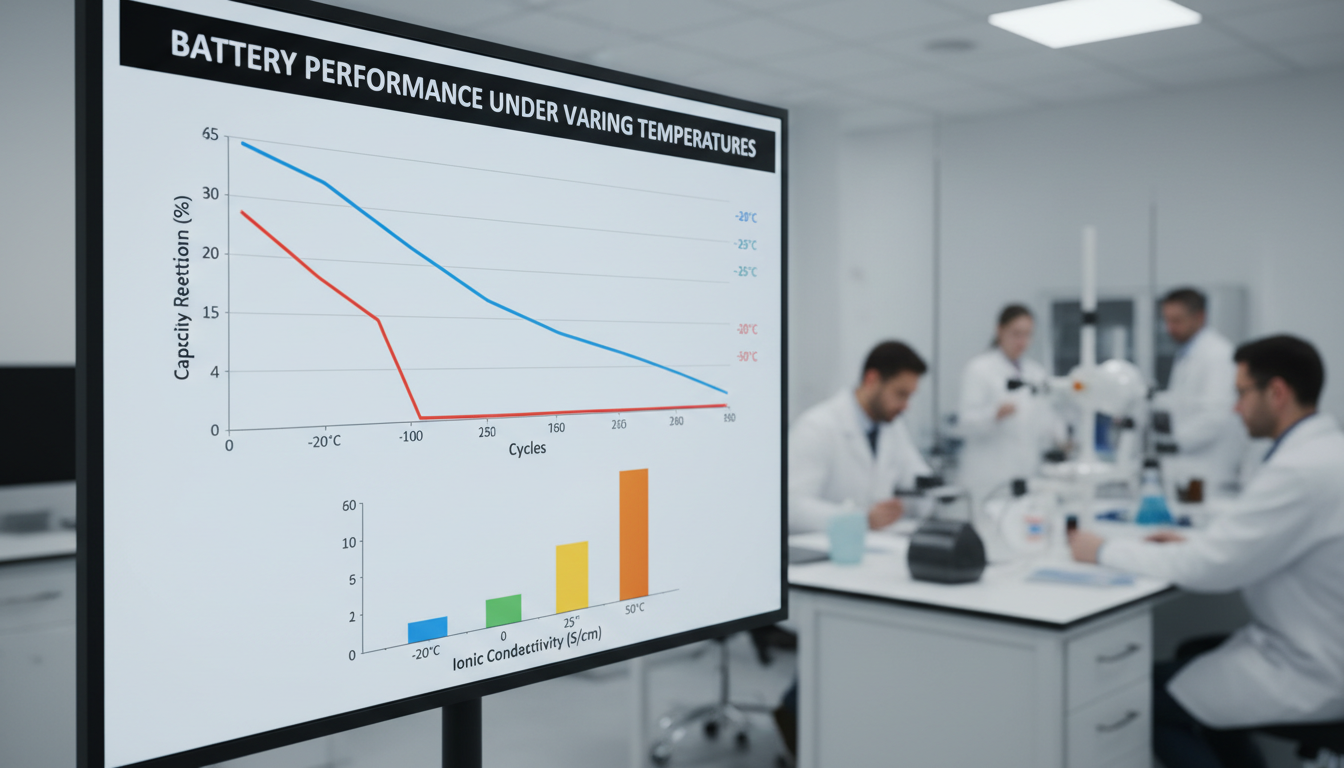
Several factors determine how smoothly lithium ions can cruise through the electrolyte. Temperature plays a huge role. Typical conductivities of liquid electrolyte at room temperature (20 °C) are in the range of 10 mS/cm, increasing by approximately 30–40% at 40 °C and decreasing slightly at 0 °C. That's why your phone might act sluggish on a freezing winter day – the ions are literally moving slower.
The concentration of lithium salt matters too. The maximum bulk conductivity occurs at an approximately 1 M salt concentration. This maximum conductivity results from a trade-off between the number of charge carriers and the ionic mobility of these charge carriers. The number of charge carriers is determined by the salt dissociation, while the ionic mobility is primarily associated with the viscosity of the electrolyte media. It's a balancing act: more salt means more ions, but too much salt makes the electrolyte thick and sluggish.
Viscosity is another critical factor. Think of it like the difference between water and honey – ions move much faster through low-viscosity liquids. A high salt concentration in an electrolyte solution comes at the cost of high viscosity, which significantly hinders ion mobility. This is why researchers carefully design electrolyte formulations to keep viscosity low while maintaining enough ions to carry the charge.
The structure of the electrolyte itself also plays a role. Since the electrode reaction occurs preferentially in regions with lower resistance, reaction distribution can be happened within composite electrodes. The ionic conductivity is decreased for lower porosity electrodes, which governs the reaction distribution of composite electrodes and their performances.
Lithium-Ion Batteries Explained: Liquid vs Solid Electrolytes
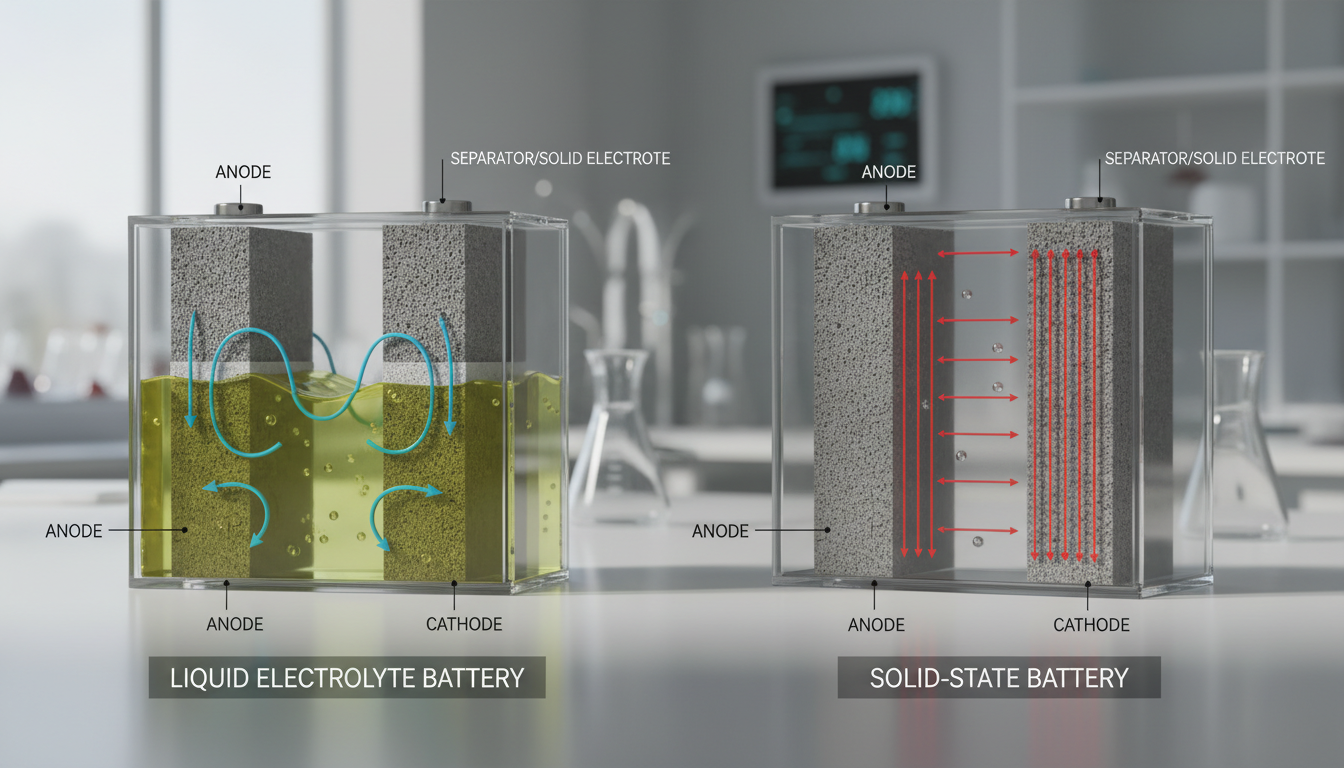
Although liquid electrolytes exhibit high ionic conductivity of 10−3–10−2 S cm−1, the highly flammable organic solvents in liquid electrolytes can raise severe safety concerns. Replacement of liquid electrolytes with solid-state electrolytes (SSEs) arouses increasing interest because SSEs bring excellent safety. This is the big debate in battery technology right now.
Liquid electrolytes have been the workhorse of lithium-ion batteries for decades. They offer fantastic ionic conductivity, which means great performance and fast charging. The downside? They're made of flammable organic materials, which is why we occasionally hear about battery fires in the news.
Solid electrolytes promise to solve the safety problem. Recent advances in battery technology involve using a solid as the electrolyte material. Solid ceramic electrolytes are mostly lithium metal oxides, which allow lithium-ion transport through the solid more readily due to the intrinsic lithium. The main benefit of solid electrolytes is that there is no risk of leaks, which is a serious safety issue for batteries with liquid electrolytes.
The challenge with solid electrolytes is getting the ionic conductivity high enough to compete with liquids. Conductivities of solid electrolytes are nearing parity with their liquid counterparts, with most on the order of 0.1 mS/cm and the best at 10 mS/cm. Researchers are making progress, but we're not quite there yet for all applications. Developing solid electrolytes with ionic conductivities greater than 1 mS/cm at room temperature remains a main challenge. The paper highlights advances made with oxyhalides, an emerging class of materials that exhibit exceptional ionic conductivities exceeding 10 mS/cm at room temperature.
Temperature Effects on Ionic Conductivity and Battery Performance
Temperature can make or break your battery's performance. We've all noticed our phones draining faster in the cold or getting hot during heavy use. This is directly related to ionic conductivity.
The stable operation of lithium-based batteries at low temperatures is critical for applications in cold climates. However, low-temperature operations are plagued by insufficient dynamics in the bulk of the electrolyte and at electrode-electrolyte interfaces. A quasi-solid-state polymer electrolyte with an ionic conductivity of 2.2 × 10⁻⁴ S cm−1 at −20 °C has been reported. This shows that getting batteries to work well in cold weather is a real engineering challenge.
At higher temperatures, ionic conductivity generally increases because the ions have more energy to move around. But there's a catch – too much heat can damage the battery and create safety risks. The high Li-ion conductivity at low temperatures can alleviate the concentration polarization, thereby improving battery performances.
The ionic conductivity of the electrolyte measured using a single DEE solvent is relatively low, with a value of only 0.22 mS cm−1 at −40 °C and 0.02 mS cm−1 at −60 °C. However, the introduction of 10% by volume of the strong solvent DME increases the conductivity of the entire electrolyte system by an order of magnitude at −40 °C and −60 °C. This demonstrates how researchers are developing specialized electrolytes for extreme conditions.
Measuring Ionic Conductivity: Methods and Challenges
How do scientists actually measure ionic conductivity? The most common method is called AC impedance spectroscopy (ACIS). The ionic conductivity of a material is typically determined using ACIS. Even experimental papers which report a measured conductivity for a material through ACIS may themselves involve a variety of measurements and sample preparations, creating uncertainty around reported values.
The basic idea is simple: you apply an alternating electrical current to your electrolyte sample and measure how it responds. The resistance tells you how easily ions are moving. But in practice, it gets complicated fast. Different labs might use different equipment, different sample preparations, and different analysis methods.
By introducing a harmonized testing procedure for impedance measurement and data analysis, deviations among participating labs were reduced to differences <1.8% for LLZO and <3.1% for LATP. This shows that standardizing measurement procedures is vital for getting reliable, comparable results across different research groups.
The ionic conductivity of the electrolyte is a property that helps to determine how fast a cell can be charged or discharged. That's why accurate measurements matter so much – they directly tell us what real-world battery performance we can expect.
Improving Ionic Conductivity: Additives and Electrolyte Engineering
Battery scientists have gotten creative about boosting ionic conductivity. One powerful approach involves carefully chosen additives. An efficient and economic way to tune targeted electrolytes properties is by adding a third component in small concentrations, known as an additive. By adding the additive in small amounts, the bulk properties of the electrolyte system will not be affected whilst the targeted property can be significantly improved. The numerous additives that have been tested can be divided into SEI chemistry modifications, those for enhancing the ion conduction properties, and those for improving the safety of the cell.
These additives work in fascinating ways. Some help form better protective layers on the electrodes, which allows ions to pass through more easily. Others reduce unwanted chemical reactions that can slow down ion movement. HF-scavenger neutralizes hydrofluoric acid generated through chemical reactions, thereby preventing damage to internal battery components. Meanwhile, Elastic SEI serves to stabilize the solid electrolyte interphase layer by protecting newly formed surfaces that result from the volume expansion of silicon anodes. These types of additives help suppress resistance even at temperatures around 60℃.
Another strategy is engineering the electrolyte composition itself. PC is highly attractive as a component for electrolyte solutions for lithium-ion cells because of its superior ionic conductivity. Researchers experiment with different solvent mixtures, salt concentrations, and even entirely new types of electrolytes to find the sweet spot of high conductivity, safety, and longevity.
Solid-State Batteries: The Future of High Ionic Conductivity
Solid-state batteries represent the next frontier. A solid-state battery uses a solid electrolyte to conduct ions between the electrodes, instead of the liquid or gel polymer electrolytes found in conventional batteries. Solid-state batteries theoretically offer much higher energy density than typical lithium-ion or lithium polymer batteries. Solid-state batteries can use metallic lithium for the anode and oxides or sulfides for the cathode, increasing energy density. The solid electrolyte acts as an ideal separator that allows only lithium ions to pass through.
The big selling point is safety. No flammable liquids mean dramatically reduced fire risk. Plus, solid electrolytes could enable the use of lithium metal anodes, which store way more energy than the graphite anodes in today's batteries.
But challenges remain. Are solid electrolytes suitable alternatives to liquid electrolytes? The answer is complicated. In conventional LIBs, the liquid electrolyte can percolate through the porous cathode, which enables efficient ion transport. Compared with the electrodes in conventional LIBs, the ones in SSBs have higher tortuosity and other resistive heterogeneities, such as grain boundaries, which lead to lower ionic conductivities in real-world applications.
Enhancing the ion conduction in solid electrolytes is critically important for the development of high-performance all-solid-state lithium-ion batteries. Lithium thiophosphates are among the most promising solid electrolytes, as they exhibit superionic conductivity at room temperature. The results show that disorder-driven diffusion dynamics significantly enhances the room-temperature conductivity. Scientists are making real progress in understanding and improving how ions move through solid materials.
Frequently Asked Questions
What does ionic conductivity tell you about a battery? Ionic conductivity reveals how quickly lithium ions can move through the electrolyte, which directly impacts how fast your battery can charge, how much power it can deliver, and how well it performs in different temperatures. Higher ionic conductivity generally means better battery performance.
Why do batteries perform worse in cold weather? Cold temperatures significantly reduce ionic conductivity because lithium ions move more slowly through the electrolyte when it's cold. This sluggish ion movement means your battery can't deliver power as effectively, resulting in reduced capacity and slower charging in winter conditions.
How do additives improve battery ionic conductivity? Additives work by modifying the electrolyte's chemistry in targeted ways – they can reduce unwanted reactions, create better ion pathways, improve the protective layers on electrodes, and enhance overall ion transport. Even tiny amounts (1-5%) can dramatically boost performance without changing the electrolyte's basic properties.
Are solid-state batteries better than liquid electrolyte batteries? Solid-state batteries offer superior safety and potentially higher energy density, but they currently face challenges with ionic conductivity and manufacturing complexity. While some advanced solid electrolytes are approaching the conductivity of liquid electrolytes, commercial solid-state batteries are still in development for most applications.
What's the ideal ionic conductivity for a lithium-ion battery? Modern liquid electrolytes typically achieve ionic conductivities around 10 mS/cm at room temperature, which is considered excellent for commercial applications. For solid-state batteries, researchers are targeting conductivities greater than 1 mS/cm at room temperature to enable practical performance, with some cutting-edge materials now exceeding 10 mS/cm.
Highstar attaches great importance to your personal privacy. When you visit our website, please agree to the use of all cookies. More information about the processing of personal data can be found at "Privacy Policy"


 Buy
Buy