Composition of Electrolyte Solution: What You Need to Know
Related Topics
Discover the composition of electrolyte solutions, from basic components like solvents and salts to specialized battery formulations. Learn what makes these conductive solutions work.
Follow us on
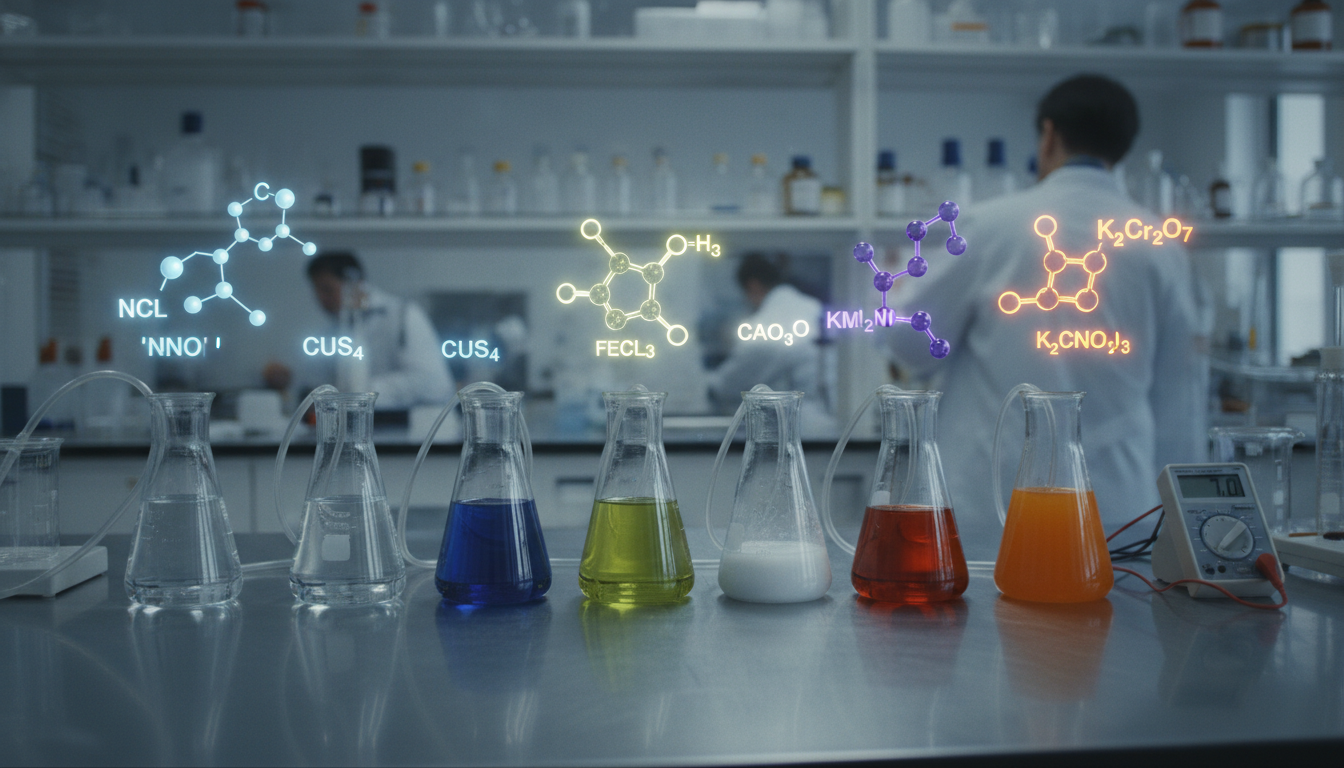
Electrolyte solutions power everything from batteries to biological systems, yet many people don't fully understand what makes them work. An electrolyte is a substance that conducts electricity through the movement of ions when dissolved in a polar solvent like water, separating into cations and anions that disperse uniformly throughout the solvent. Let's break down what goes into these conductive solutions and why each component matters.
At Highstar, we've spent years developing ternary lithium battery technology that relies on precisely formulated electrolyte solutions. Understanding these compositions helps us create better battery cells for diverse applications.
Basic Components of Electrolyte Solutions
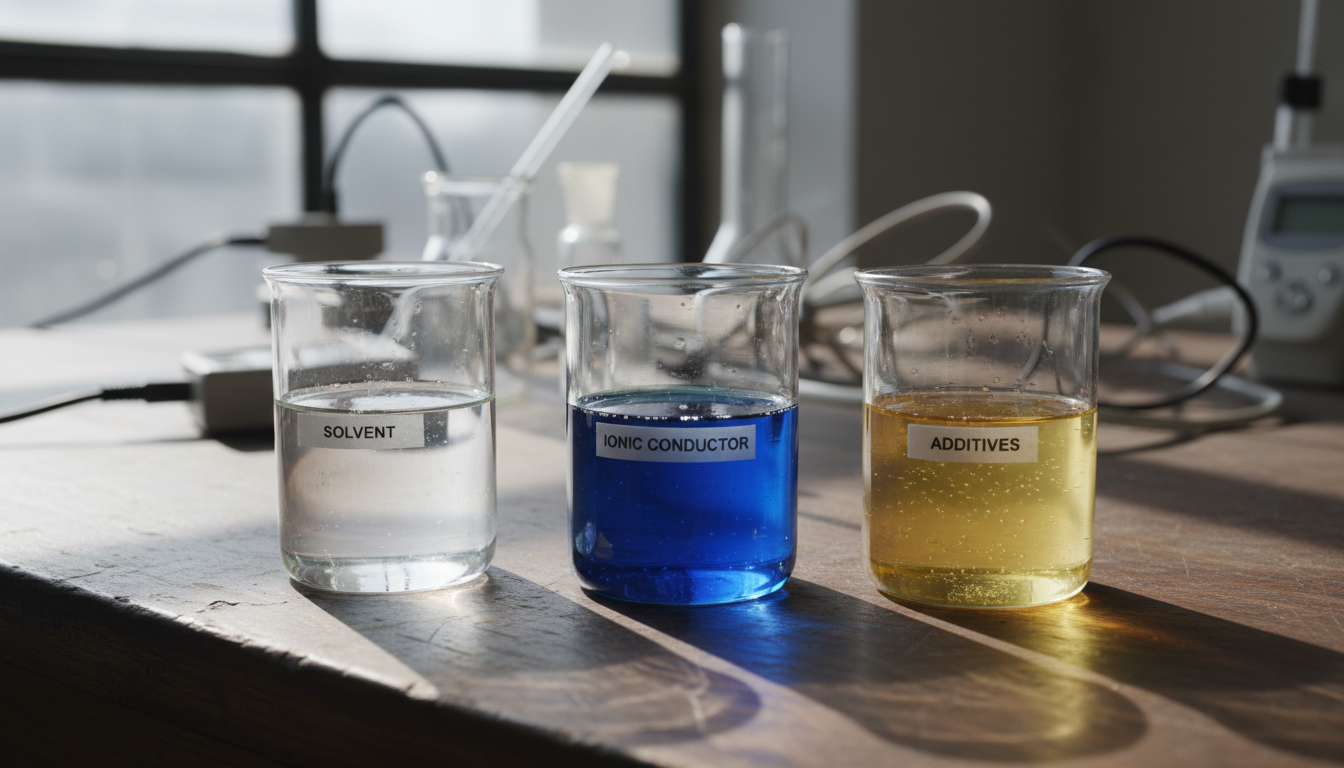
A liquid electrolyte consists of three main components: solvent, ionic conductor, and additives. Think of the solvent as the carrier medium—usually water for general applications or organic solvents for batteries. The ionic conductor (typically a salt) provides the charged particles that actually move electricity through the solution. Additives fine-tune performance characteristics like stability and conductivity.
Electrolyte solutions normally form when salt is placed into a solvent such as water, and the individual components dissociate due to thermodynamic interactions between solvent and solute molecules in a process called solvation. When you add table salt (sodium chloride) to water, it splits into sodium and chloride ions that float freely through the liquid.
Solvents: The Foundation
For electrolytes, water is the most important solvent, though ethanol, ammonia, and acetic acid are some non-aqueous solvents that can dissolve electrolytes. Water works so well because of its polar nature—the molecules have positive and negative ends that attract and surround ions, pulling them apart from their crystalline structure.
Battery applications often require different solvents. Our research on how lithium ions move in batteries shows that organic carbonate mixtures work better than water for lithium-ion systems. These organic solvents won't react with the battery's active materials and can handle wider voltage ranges.
Ionic Conductors: The Charge Carriers
If a high proportion of the solute dissociates to form free ions, the electrolyte is strong; if most of the solute does not dissociate, the electrolyte is weak. Strong electrolytes like sodium chloride, nitric acid, and potassium hydroxide completely break apart into ions. Weak electrolytes only partially dissociate, limiting their conductivity.
Significant electrolytes include sodium, potassium, chloride, magnesium, calcium, phosphate, and bicarbonates. These specific ions serve different functions depending on the application—biological systems need sodium and potassium for nerve signals, while batteries need lithium salts for energy storage.
Battery Electrolyte Formulations
Battery electrolytes get more complex. A standard electrolyte formulation contains a mixture of linear and cyclic carbonate solvents as a 1 molar salt solution, where the salt is typically lithium hexafluorophosphate (LiPF6). This specific combination has remained relatively unchanged since the 1990s because it works reliably.
Electrolyte solutions composed of organic solvents, LiPF6 salt and various additives are engineered to optimize the performance of advanced lithium-ion cells. Each manufacturer develops proprietary additive mixtures to improve characteristics like cycle life, temperature performance, and safety.
Our advanced battery cells use carefully balanced electrolyte formulations tailored to specific cathode and anode chemistries. Getting the composition right makes the difference between a battery that lasts 500 cycles and one that lasts 2,000.
Concentration Matters
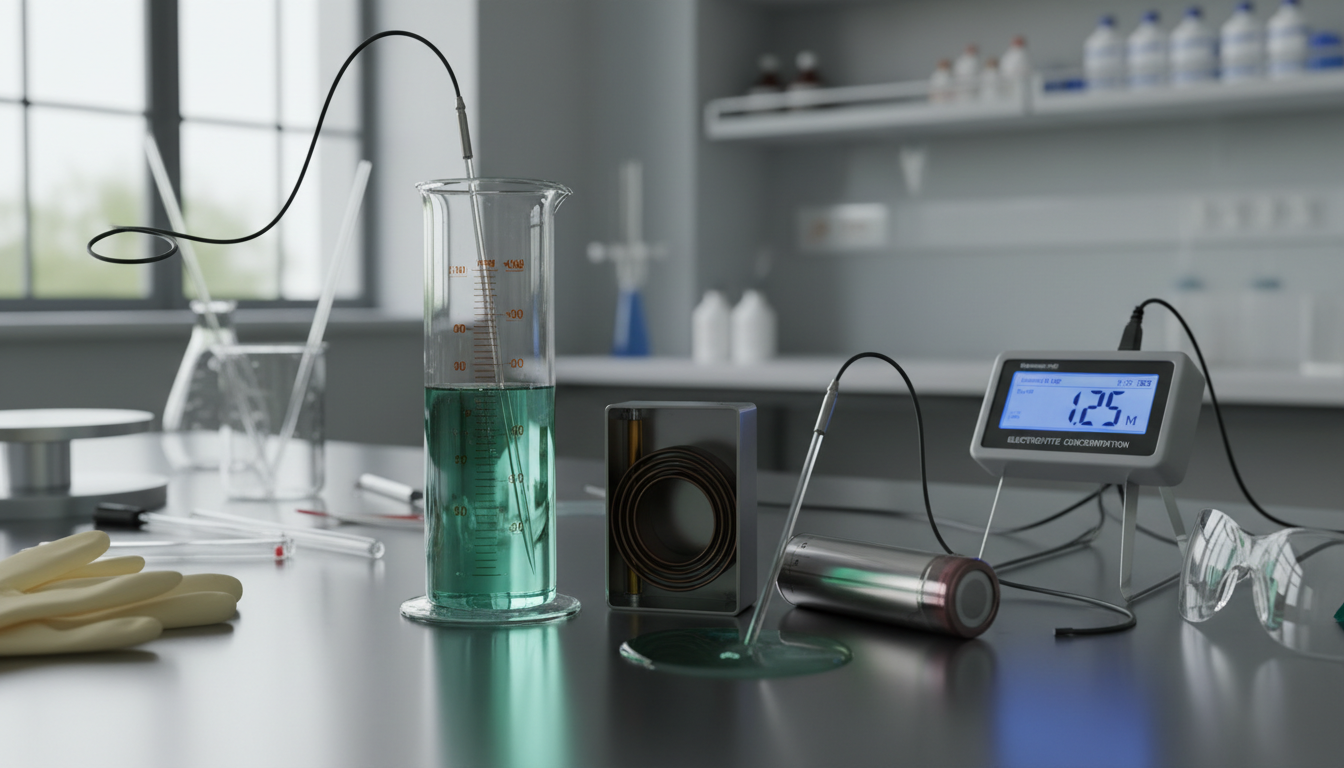
An electrolyte in a solution may be described as concentrated if it has a high concentration of ions, or dilute if it has a low concentration. But here's something interesting: in most non-aqueous lithium-ion conducting electrolyte solutions, the maximum bulk conductivity occurs at an approximately 1 M salt concentration.
You might think more salt means better conductivity, but that's not true. Too much salt increases viscosity and reduces ion mobility. Too little salt means fewer charge carriers. There's a sweet spot where conductivity peaks.
Lead-Acid Battery Electrolytes
Not all batteries use lithium. Lead acid uses sulfuric acid, and when charging, the acid becomes denser as lead oxide forms on the positive plate, then turns to almost water when fully discharged. This simpler composition—just water and sulfuric acid—has powered car batteries for over a century.
The electrolyte solution is made up of two main substances: water and sulfuric acid, forming a mixture of these components. The ratio typically sits around 35-40% sulfuric acid to 60-65% distilled water.
Specialty Formulations
Beyond standard aqueous and battery electrolytes, researchers are exploring new options. Ionic liquids, which are molten salts with melting points below 100°C, are a type of highly conductive non-aqueous electrolytes and have found applications in fuel cells and batteries. These materials stay liquid at room temperature without needing a solvent.
Solid-state batteries represent another frontier. Dry polymer electrolytes differ from liquid and gel electrolytes in that salt is dissolved directly into the solid medium. These eliminate leakage risks and potentially improve safety.
Conclusion
The composition of electrolyte solutions varies dramatically based on application, but all share common principles. Solvents provide the medium, ionic conductors supply the charge carriers, and additives fine-tune performance. Whether you're looking at simple saltwater, medical rehydration solutions, or advanced lithium battery electrolytes, the same basic chemistry applies—just with different ingredients optimized for different jobs. Understanding these compositions helps us at Highstar develop better battery technology that powers tomorrow's electric vehicles and energy storage systems.
FAQs
What are the main components in an electrolyte solution?
The three main components are solvent (like water or organic carbonates), ionic conductor (typically a salt that provides ions), and additives that improve stability and performance. The solvent serves as the carrier medium, while the salt dissociates into cations and anions that conduct electricity.
Why do batteries use different electrolytes than sports drinks?
Batteries need electrolytes that work with specific electrode materials and voltage ranges without degrading. Lithium batteries use organic solvents with lithium salts because water would react destructively at battery voltages. Sports drinks use simple sodium and potassium salts in water because the human body needs these specific ions for biological functions at safe, low voltages.
Can you mix different electrolyte solutions together?
Generally no—mixing different electrolyte formulations can cause unwanted chemical reactions or precipitation. Battery electrolytes are precisely balanced for specific chemistries, and mixing them can damage the system. Medical electrolyte solutions must maintain specific ion ratios for safety. Always use the electrolyte type designed for your specific application.
What makes an electrolyte strong or weak?
Strong electrolytes completely dissociate into ions when dissolved, meaning nearly 100% of the salt molecules split apart. Weak electrolytes only partially dissociate, with most molecules staying intact. Strong electrolytes like sodium chloride or sulfuric acid conduct electricity much better than weak electrolytes like acetic acid.
Why is concentration important in electrolyte solutions?
Concentration affects conductivity, viscosity, and chemical stability. Too little salt means fewer charge carriers and poor conductivity. Too much salt increases thickness and reduces ion movement. Most lithium battery electrolytes work best at around 1 molar concentration, where conductivity peaks before viscosity becomes problematic.
Highstar attaches great importance to your personal privacy. When you visit our website, please agree to the use of all cookies. More information about the processing of personal data can be found at "Privacy Policy"


 Buy
Buy