Dendrites in Lithium Batteries: What They Are and Why They Matter
Related Topics
Dendrites are sharp, branch-like lithium crystals that form on battery anodes. Learn how they develop, why they're dangerous, and what's being done to stop them.
Follow us on
Lithium batteries power everything from smartphones to electric vehicles, but they hide a potentially dangerous problem beneath their sleek exteriors. As these batteries charge and discharge, tiny metallic structures can grow inside them—branching out like frost on a windowpane. These formations, called dendrites, can pierce through the battery's internal separator, causing short circuits, fires, or even explosions. We're diving into what dendrites are, why they form, and how the battery industry is working to prevent them.
What Are Dendrites?
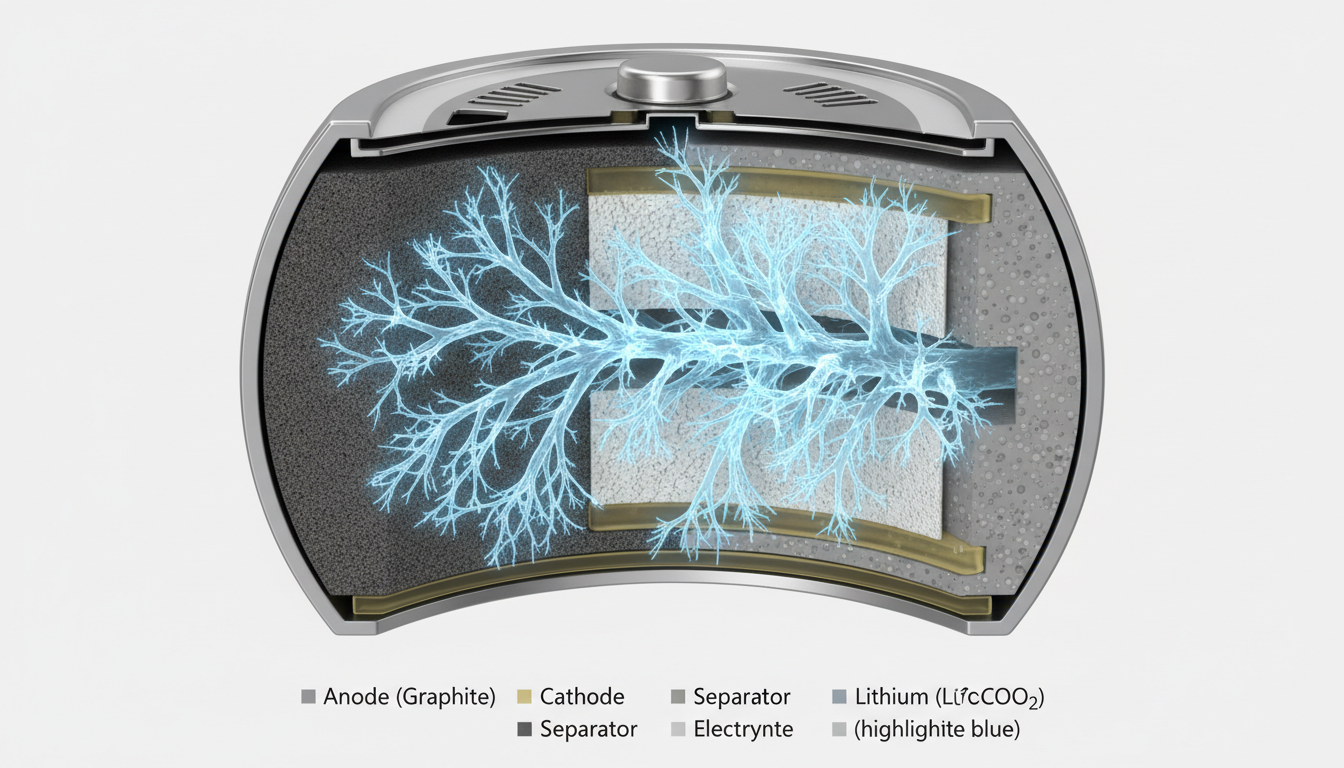
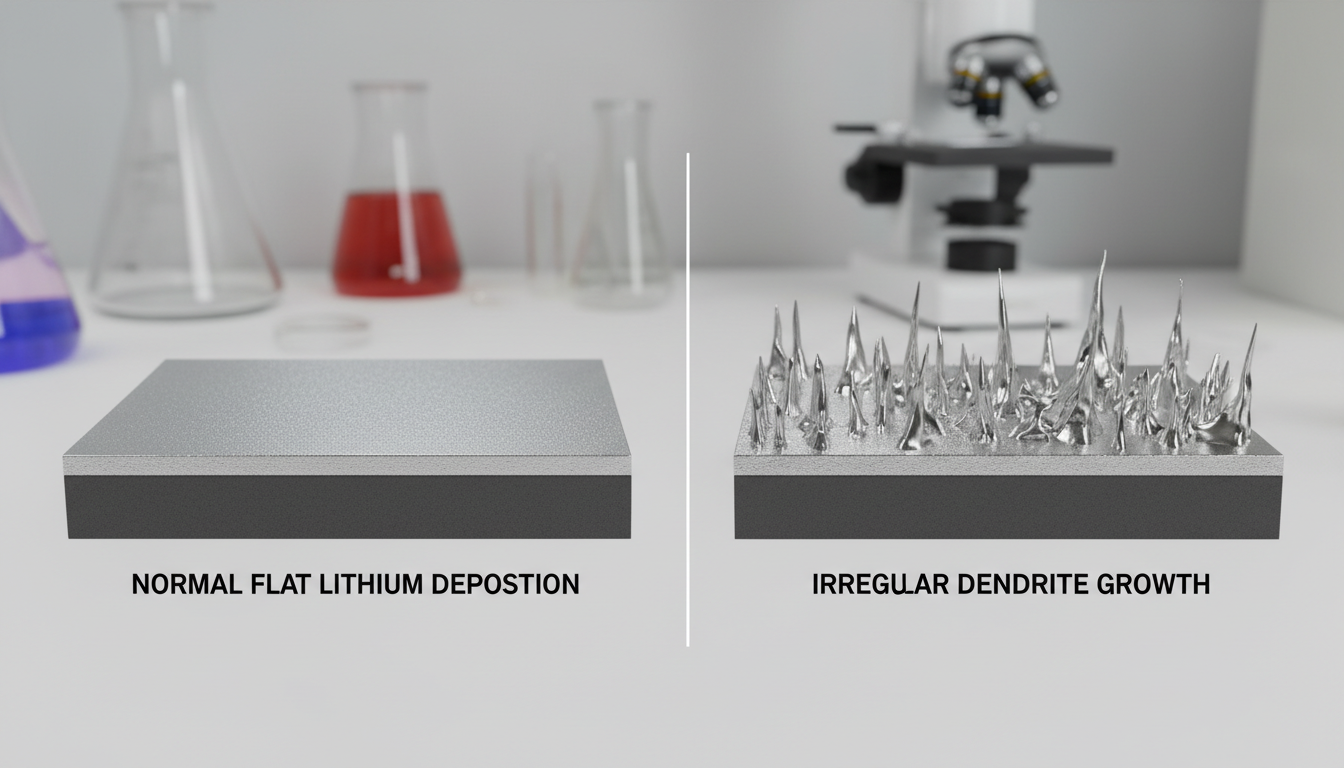
Dendrites are metallic lithium crystals that grow on the anode surface during battery operation. The name comes from the Greek word for "tree," which makes sense when you look at their structure. These growths start small but branch out in sharp, needle-like or tree-like patterns as the battery cycles through charging and discharging.
The problem isn't just their shape—it's where they grow. During charging, lithium ions move from the cathode to the anode and deposit as metallic lithium. Ideally, this happens smoothly and evenly. But when conditions aren't perfect, lithium accumulates unevenly, creating these dangerous protrusions. At Highstar, we've seen how dendrite formation affects battery performance and safety across different chemistries, including our ternary lithium cells.
Why Do Dendrites Form?
Several factors push lithium to deposit unevenly and create dendrites. High charging rates are one of the biggest culprits. When you charge a battery too quickly, lithium ions don't have time to distribute evenly across the anode surface. They pile up in certain spots, and dendrites start growing from those concentrated areas.
Temperature plays a role too. Cold temperatures slow down the movement of lithium ions through the electrolyte, making uneven deposition more likely. Surface imperfections on the anode—tiny scratches, bumps, or inconsistencies—give dendrites a starting point to grow. Even the quality of the electrolyte matters. If it breaks down or forms an unstable layer on the anode, that creates conditions where dendrites thrive.
The Safety Risks
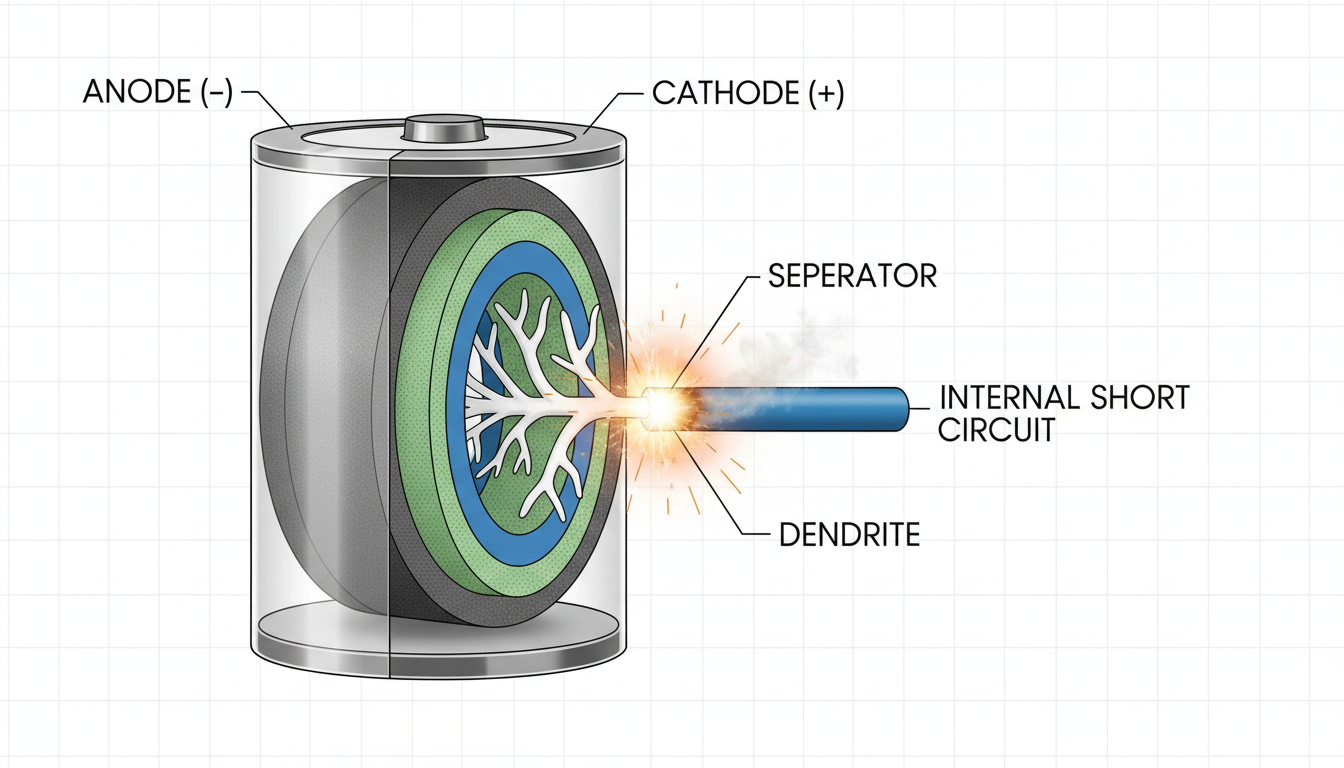
Dendrites aren't just a performance issue—they're a genuine safety hazard. As they grow longer, they can eventually pierce the separator, which is the thin membrane keeping the anode and cathode apart. Once that barrier is breached, you get a short circuit. The battery heats up rapidly, and in worst-case scenarios, it catches fire or explodes.
This phenomenon, sometimes called "thermal runaway," happens when the heat from a short circuit triggers a chain reaction. The battery gets hotter, which causes more reactions, which creates more heat. We've all heard news stories about phone batteries catching fire or electric vehicles burning after crashes—dendrites are often part of that story. The risk is real enough that battery researchers and manufacturers spend significant resources trying to prevent dendrite formation.
How Batteries Are Fighting Back
The battery industry isn't sitting still. Researchers are testing multiple strategies to stop dendrites before they become dangerous. One approach involves solid-state electrolytes, which replace the liquid electrolyte with a solid material that's harder for dendrites to penetrate. This technology shows promise but still faces manufacturing challenges.
Another strategy focuses on improving the anode surface. Some batteries now use coatings or additives that promote even lithium deposition. Scientists have also discovered that certain electrolyte formulations create a more stable interface with the anode, reducing dendrite nucleation. Temperature management helps too—keeping batteries within optimal temperature ranges during charging slows dendrite growth.
Some research even suggests that carefully controlled heating can "heal" small dendrites by redistributing the lithium more evenly. Battery management systems in modern devices monitor charging rates, temperatures, and voltage to minimize conditions that favor dendrite formation. Our cylindrical and prismatic cells incorporate design features aimed at reducing these risks.
Conclusion
Dendrites represent one of the toughest challenges in battery technology. These sharp lithium crystals form when batteries charge unevenly, and they can grow until they pierce internal barriers and cause dangerous short circuits. But the problem isn't unsolvable. Through better materials, smarter charging systems, and new battery designs, the industry is making progress. We'll likely see batteries become safer and more reliable as these solutions mature. For now, understanding dendrites helps us appreciate both the power and the complexity of the lithium batteries we rely on every day.
FAQs
What causes dendrites to form in lithium batteries?
Dendrites form when lithium deposits unevenly on the anode during charging. Fast charging rates, low temperatures, surface imperfections, and poor-quality electrolytes all contribute to uneven deposition. Basically, when lithium ions can't spread out smoothly, they cluster and grow into branching structures instead of forming a uniform layer.
Can you see dendrites in a battery?
Not without special equipment. Dendrites grow inside sealed battery cells, so you can't see them with the naked eye. Researchers use techniques like X-ray imaging, electron microscopy, and specialized optical setups to observe dendrite formation. By the time a battery shows external signs of dendrite damage—like swelling or heating—the problem is already serious.
Do all lithium batteries develop dendrites?
All lithium batteries face some risk of dendrite formation, but the likelihood varies based on battery chemistry, design, and how you use them. Batteries charged slowly at moderate temperatures face lower risk than those fast-charged in extreme cold. Good battery management systems and quality manufacturing can reduce dendrite formation, but they can't eliminate the risk completely.
How do dendrites affect battery life?
Before they cause safety issues, dendrites reduce battery performance. They consume lithium that should be available for normal operation, which lowers capacity over time. They can also increase internal resistance, making the battery less efficient. In many cases, batteries lose performance gradually as small dendrites form, even if they never grow large enough to cause a short circuit.
Are solid-state batteries immune to dendrites?
Not entirely, though they're more resistant. Solid electrolytes are harder for dendrites to penetrate compared to liquid electrolytes, which makes them safer. But researchers have found that dendrites can still form and propagate through solid electrolytes under certain conditions, especially at high current densities. Solid-state technology reduces the risk but doesn't eliminate it completely.
Highstar attaches great importance to your personal privacy. When you visit our website, please agree to the use of all cookies. More information about the processing of personal data can be found at "Privacy Policy"


 Buy
Buy