Cell-to-Body (CTB) Battery Technology: How It's Reshaping Electric Vehicles
Related Topics
Discover how CTB (Cell-to-Body) technology integrates batteries directly into vehicle structures, reducing weight while boosting safety, range, and performance in modern electric cars.
Follow us on
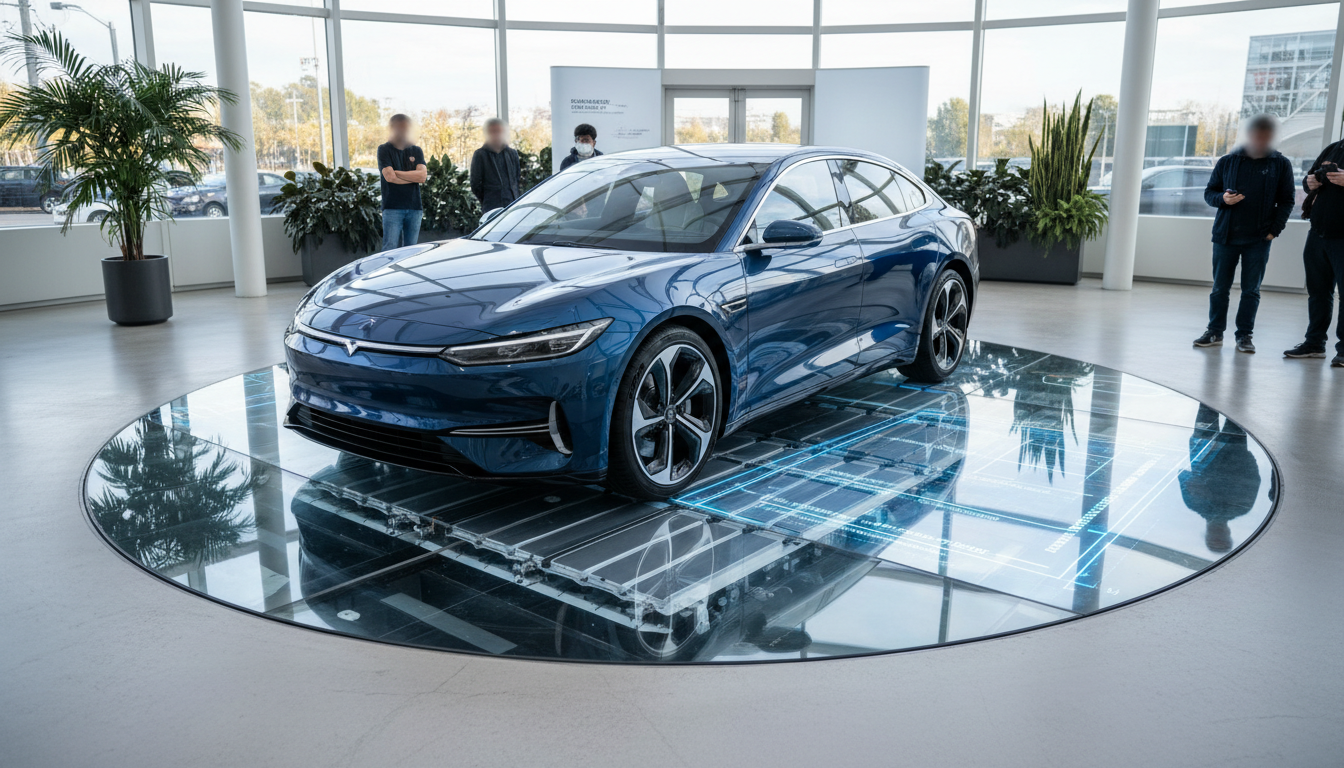
Electric vehicles are changing fast. One of the biggest shifts happening right now isn't just about battery chemistry—it's about where we put those batteries. Cell-to-Body (CTB) technology flips traditional battery design on its head by making the battery itself part of the car's structure. Instead of bolting a separate battery pack under the floor, the battery becomes the floor.
This isn't just a small tweak. It's a complete rethinking of how EVs are built, and it's already showing up in production cars from companies like BYD, with other automakers watching closely.
What Is CTB Technology?
Cell-to-Body (CTB) technology eliminates the need for a traditional battery housing by integrating battery cells directly into the vehicle's structure.[3] Think of it like this: instead of building a protective box for your battery and then mounting that box to the car, you skip the box entirely and build the battery right into the car's skeleton.
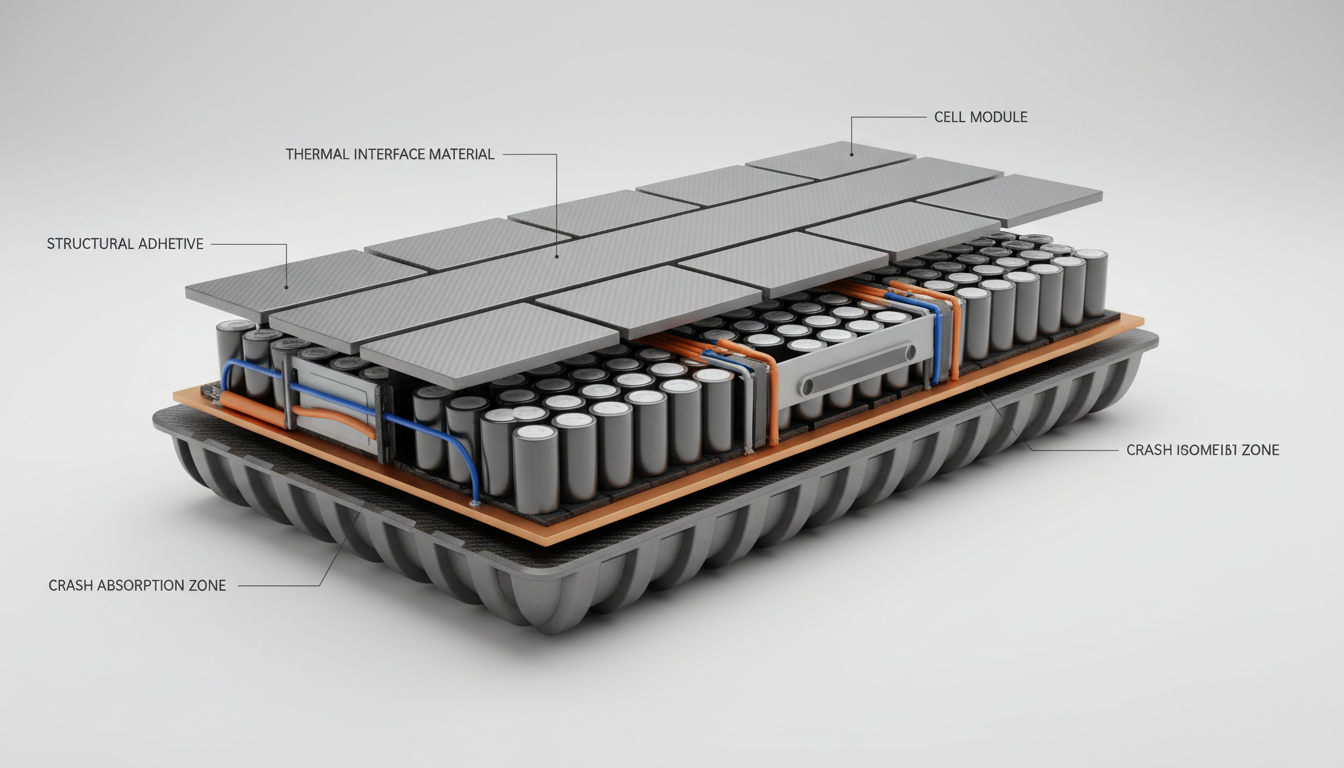
CTB means the battery is incorporated within the entire vehicle structure, integrating the battery pack's top cover with the traditional body floor structure to form a sandwich-like structure incorporating the top cover, the Blade Battery and the tray.[6] The cells aren't just sitting inside the chassis—they are the chassis in that section of the vehicle.
We've seen battery integration progress through stages. Traditional designs use Cell-to-Module (where cells group into modules, then into packs). Cell-to-Pack (CTP) allows battery cells to be integrated directly into a single-pack structure, eliminating the need for individual modules.[10] CTB takes this one step further by removing even the separate pack housing.
Several companies like Highstar are advancing battery cell technologies to support these next-generation integration approaches, focusing on both ternary lithium and other chemistries that enable safer structural applications.
How CTB Differs from Traditional Battery Packs
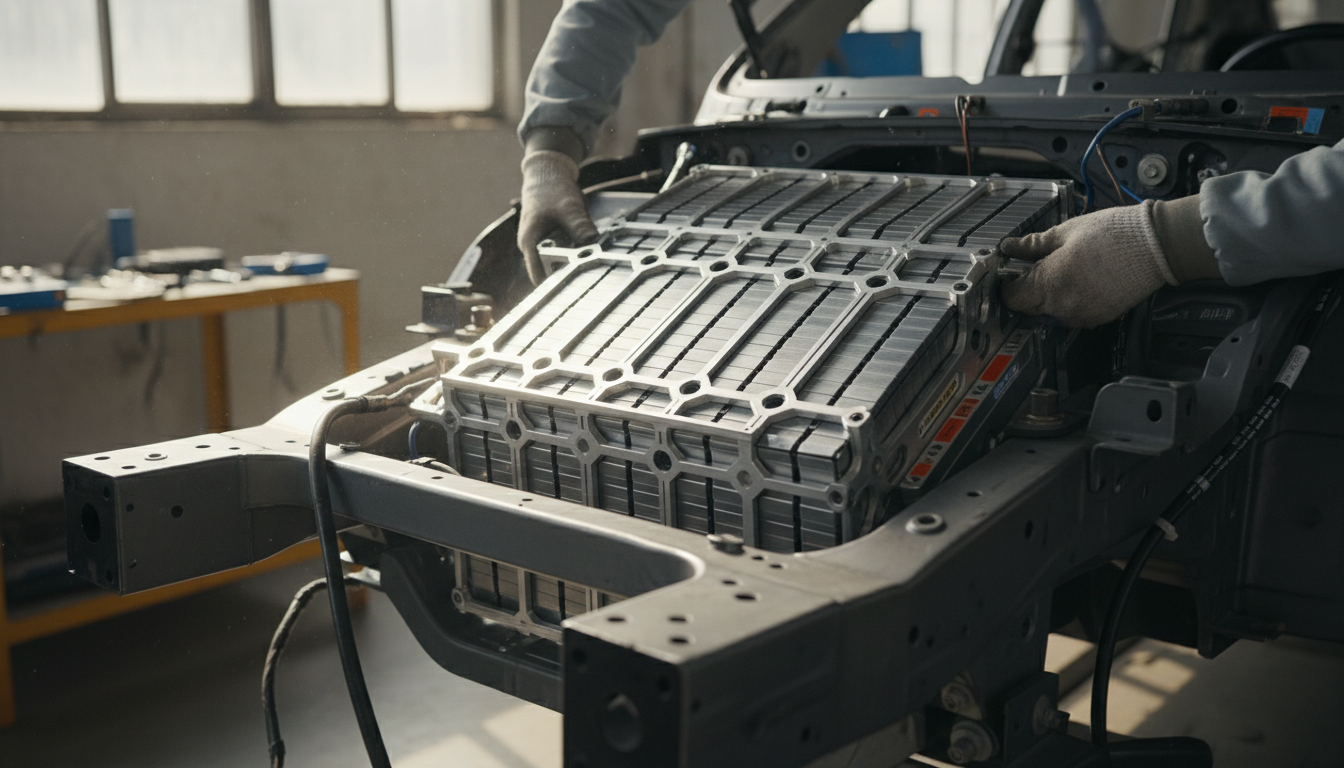
Traditional EV batteries follow a nested approach: cells go into modules, modules go into a pack, and the pack bolts to the vehicle. The 'standard' scheme has long involved cells, modules and a battery pack, with groups of cells grouped into modules placed inside the battery pack proper.[1]
CTB throws out that playbook. The battery cells are built directly into the structural body, which eliminates the need for extra parts.[10] The top cover of the battery essentially becomes the vehicle's floor panel.
Instead of bolting a battery pack into a pre-built floorpan, BYD integrates the top cover of its Blade Battery directly into the vehicle's underbody.[1] This creates what BYD calls a sandwich structure—upper cover, battery cells, and lower tray all working together as one rigid unit.
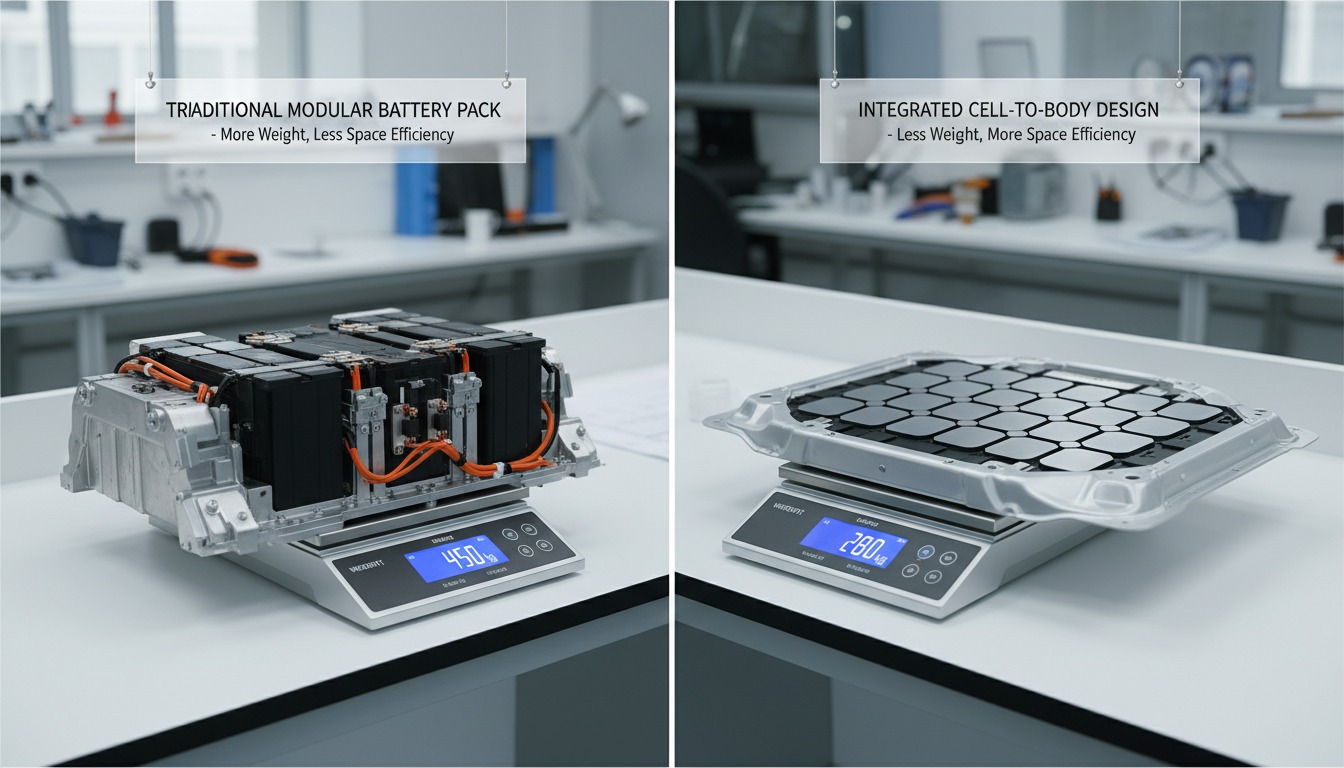
The practical difference? Fewer parts, less weight, more space for actual battery capacity. CTB decreases car battery weight, simplifies the vehicle assembly process, and lowers manufacturing costs of the battery cells for cars, allowing a lower-priced, more competitive electric vehicle.[2]
Key Benefits of Cell-to-Body Integration
Weight Reduction and Better Packaging
Integrating cells into the body "reduces the weight of the vehicle and frees up space" because you don't need extra steel for a battery casing.[4] Every kilogram saved means better efficiency and longer range. Plus, all that freed-up space can hold more battery cells.
BYD reports a 66% volume utilization (more of the space is active battery) and a super-rigid body (torsional stiffness >40,000 Nm).[4] That's luxury-car-level stiffness from a mid-size sedan.
Structural Strength and Safety
Here's where it gets interesting. The CTB battery system serves as a source of energy, as well as a structural component.[6] By making the battery load-bearing, you actually make the entire car stiffer and stronger.
SAE International's technical paper reviewed how CTB increases the structural strength of the vehicle, while also reducing intrusions into driver and passenger spaces from impacts.[2] Under this structure, the battery is not only energy body, but also structural body to participate in force transmission and stress of the whole vehicle, which can reduce the intrusion of the side pillar by 45%.[8]
Manufacturing Efficiency
Simpler designs mean faster production. Tesla's structural pack reduces part count by 370 pieces, which can cut manufacturing time and cost.[4] Fewer parts to source, assemble, and manage translates directly to lower production costs—savings that can get passed to buyers.
Real-World Applications and Performance
BYD pioneered commercial CTB with the Seal sedan, launched in 2022 on their e-Platform 3.0. Its 2022 Seal sedan was the first production EV to use a full CTB design.[4] The results speak for themselves: The Seal's body has a drag coefficient of just 0.219 and can sprint 0–100 km/h in only 3.8 seconds, all while sipping just 12.7 kWh per 100 km.[4]
Other automakers are following suit. Xpeng's new "Fuyao" platform uses a CTB-like approach where the battery pack top cover is also the car's floor, saving 5% of vertical space inside the cabin.[4] Tesla's Cell-to-Chassis approach (their term for similar integration) is rolling out in Texas-built Model Y vehicles.
Looking at the broader EV landscape, different electric vehicle classifications from BEVs to PHEVs can benefit from this technology, though it's currently most prevalent in pure battery-electric designs where maximum integration makes the most sense.
Challenges and Considerations
Nothing's perfect, and CTB has trade-offs.
Repair and Serviceability
When the battery becomes part of the body, serviceability gets tricky as repairs may require structural disassembly, and recycling at end-of-life becomes more complex.[1] If you damage the battery in a crash, you might be looking at major bodywork, not just a battery replacement.
Thermal Management
Thermal management demands precision as cooling systems must be embedded without compromising rigidity or safety.[1] You need careful engineering to keep cells at the right temperature when they're built into structural components.
Manufacturing Complexity
Building CTB vehicles requires different factory processes. There are a number of questions around manufacturing, repair and service that we need to understand.[2] It's not just about designing the battery differently—it's about rethinking the entire vehicle assembly line.
Conclusion
Cell-to-Body technology represents a fundamental shift in how we think about EVs. By turning the battery from a component into structure, CTB delivers measurably better performance, efficiency, and safety. The 66% space utilization, 40,000+ Nm torsional stiffness, and 45% reduction in crash intrusion aren't marketing fluff—they're engineering achievements with real-world benefits.
Yes, there are hurdles around repairability and manufacturing. But the direction is clear. As more automakers adopt CTB and related integration strategies, we'll see EVs that are lighter, stronger, safer, and more affordable. The battery isn't just powering the car anymore—it's becoming the car.
FAQs
What does CTB stand for in electric vehicles?
CTB stands for Cell-to-Body, a battery integration technology where battery cells are built directly into a vehicle's structural body instead of being housed in a separate battery pack. This eliminates the traditional battery casing and makes the battery itself a load-bearing structural component of the vehicle, reducing weight and improving space efficiency.
How is CTB different from CTP battery technology?
Cell-to-Pack (CTP) eliminates battery modules by placing cells directly into a single pack structure, which is then mounted to the vehicle. CTB goes further by removing the separate pack housing entirely and integrating the cells directly into the vehicle's floor structure. Think of CTP as simplifying what goes inside the battery box, while CTB eliminates the box altogether.
Which electric vehicles currently use CTB technology?
BYD was the first to commercialize CTB with the Seal sedan in 2022, and also uses it in models like the Han EV. Xpeng uses a similar "Cell Integrated Body" approach in their Fuyao platform. Tesla's "Cell-to-Chassis" technology in some Model Y variants is conceptually similar. Currently, only a handful of automakers have production vehicles with this technology, but more are developing it.
Is CTB technology safe in a crash?
Yes, CTB can actually improve crash safety. The integrated battery structure increases vehicle rigidity and can reduce side-pillar intrusion during impacts by up to 45% according to BYD data. SAE International research confirms that CTB increases structural strength while reducing intrusions into passenger spaces. The batteries must pass rigorous safety tests, and BYD's implementation has achieved 5-star Euro NCAP ratings.
What are the main disadvantages of Cell-to-Body batteries?
The biggest challenge is repairability—if the battery is damaged, repairs may require structural disassembly rather than simply replacing a battery pack. This could increase repair costs and complexity. Additionally, end-of-life recycling is more complicated, and manufacturing requires entirely new assembly processes. Thermal management is also more challenging since cooling systems must be embedded into structural components without compromising safety or rigidity.
Highstar attaches great importance to your personal privacy. When you visit our website, please agree to the use of all cookies. More information about the processing of personal data can be found at "Privacy Policy"


 Buy
Buy