Battery Manufacturing Process: From Raw Materials to Finished Cells
Related Topics
Learn how batteries are made through electrode manufacturing, cell assembly, and formation. Get insights into mixing, coating, and quality control steps.
Follow us on
We've spent years working with battery technology, and the manufacturing process behind lithium-ion batteries is nothing short of remarkable. What goes into making the cells that power electric vehicles and store renewable energy? From slurry mixing to final testing, each step plays a role in creating safe, high-performing batteries.
Let's walk through the battery manufacturing process and break down what makes it work.
Slurry Mixing: Where It All Begins
Battery production starts with creating the electrode slurry—a carefully balanced mixture of active materials, conductive additives, binders, and solvents. For the cathode, manufacturers typically mix lithium-metal compounds with polymer binders like polyvinylidene fluoride (PVdF) dissolved in N-Methyl-2-pyrrolidone (NMP). The anode side uses graphite or silicon-graphite blends with binders like carboxymethyl cellulose (CMC).
Getting the slurry right is non-negotiable. A thorough mixing of slurry is essential for homogeneity. The viscosity needs to hit that sweet spot—too thick and the coating process becomes unpredictable, too thin and the electrodes won't perform well. We monitor density and viscosity throughout mixing to keep material composition consistent and avoid costly defects down the line.
Key slurry components:
Active materials (lithium compounds, graphite)
Conductive additives (carbon black)
Polymer binders
Solvents (NMP, water-based solutions)
At Highstar, we know that battery chemistry matters. Whether you're working with LFP battery or ternary lithium systems, the mixing stage sets the foundation for everything that follows.
Coating and Drying Electrodes
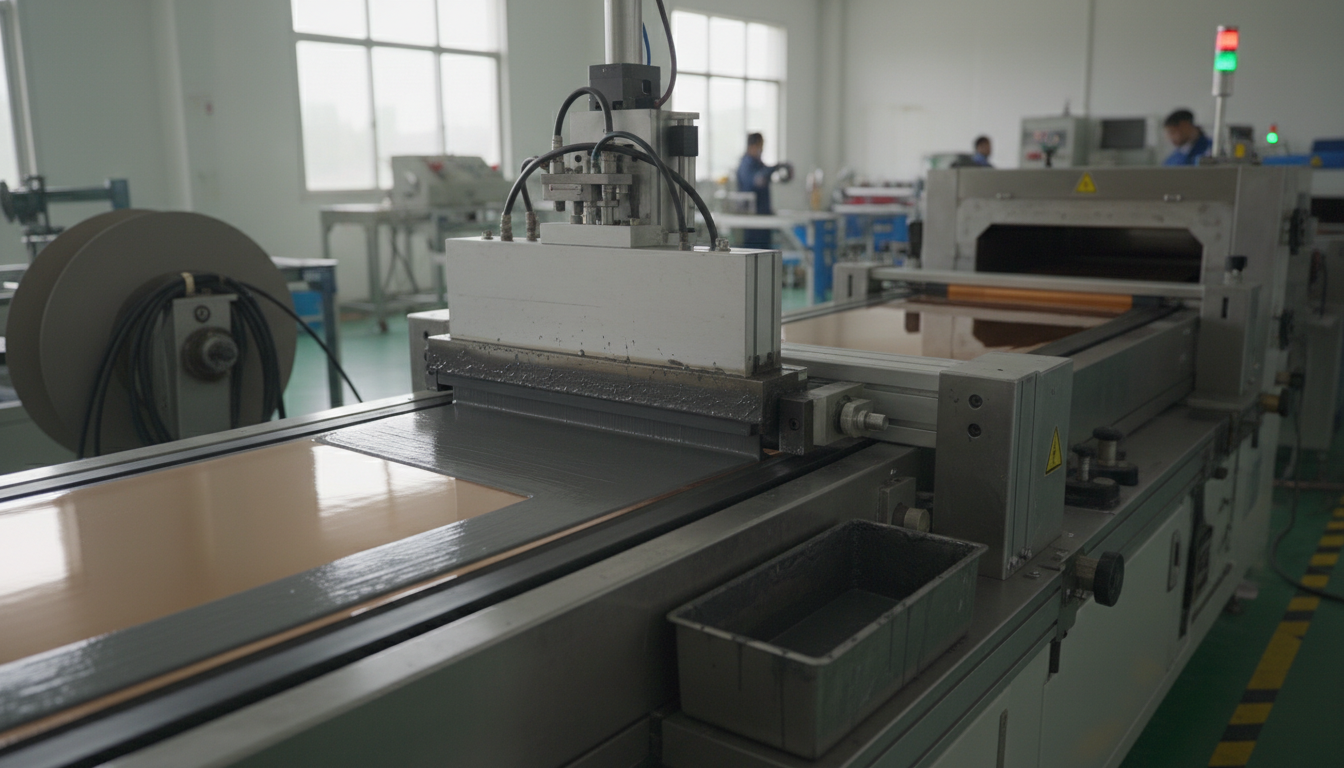
Once the slurry is ready, it gets coated onto metal foils—aluminum for cathodes, copper for anodes. For lithium-ion batteries, slot die method that allows a quick coating is commonly used. This technique applies the slurry in a uniform pattern and thickness, which directly affects battery performance.
After coating, the electrodes move through convective air dryers to remove solvents. The throughput speed during coating defines the length of the dryer section. Drying isn't just about evaporating liquid—it's about creating the right porosity and ensuring complete solvent removal without causing cracks or blistering.
Manufacturers recover toxic solvents like NMP during this process, both for cost savings and environmental compliance. The dried electrodes get rolled into mother rolls, ready for the next stage.
Calendering: Compressing for Performance
After drying, the coated electrode undergoes calendaring, where it's compressed between precision rollers to achieve the desired thickness, density and surface smoothness. This step controls the electrode's porosity and improves conductivity between layers.
Calendering requires precision. Too much pressure causes cracking or delamination. Not enough pressure leaves poor contact points and lower energy density. Temperature, roller speed, and alignment all need careful monitoring to maintain uniformity across the entire electrode sheet.
Cell Assembly: Bringing Components Together
With electrodes prepared, cell assembly begins. The components of the cell are first assembled together, namely the anode and cathode with a separator in between and then immersed in electrolyte fluid. The separator—a porous membrane made of polypropylene or polyethylene—prevents short circuits while allowing lithium ions to flow.
Cells come in three main formats: cylindrical, prismatic, and pouch. Each has different assembly requirements, but the basic principle stays the same—layer electrodes with separators, connect terminals, seal the housing, and fill with electrolyte.
Electrolyte filling is time-sensitive. The voids in the cell stack don't fill completely on the first cycle, requiring multiple filling rounds. This step can take days or even weeks before a battery is ready for formation.
Formation and Testing
The formation describes the first charging and discharging processes of the battery cell. During formation, the solid electrolyte interphase (SEI) layer forms on the anode surface—a protective layer that's key to battery longevity and safety.
Formation happens under controlled conditions with specific charging rates (typically 0.1C to 0.5C) and state-of-charge targets. Some manufacturers pressurize pouch cells during formation using special fixtures to improve structural integrity.
After formation, cells go through aging periods where they rest under monitored conditions. Gas formation is checked, and any degassing is performed. Finally, end-of-line testing measures capacity, internal resistance, and voltage consistency. After testing, many cell manufacturers sort the cells according to their performance data (grading).
Cells with matching characteristics get grouped together for module assembly. This grading process matters because batteries perform best when individual cells have similar electrical properties.
Quality Control Throughout Production
Quality control happens at every stage. Before mixing even starts, manufacturers validate the properties of raw materials. During coating, inline measurement systems track thickness and uniformity to sub-micron precision. Automated systems check for defects, measure coating weight, and verify electrode dimensions.
Defect detection uses machine vision and AI to separate acceptable variations from genuine problems. This reduces scrap rates and catches issues before they propagate through the production line.
Battery manufacturing demands precision at scale. Production lines need to balance speed with quality control, automation with flexibility, and cost-efficiency with safety standards.
Conclusion
The battery manufacturing process transforms raw materials into finished cells through a series of interconnected steps. Slurry mixing creates the electroactive pastes, coating and drying form the electrodes, calendering optimizes their physical properties, and cell assembly brings everything together. Formation and testing validate performance before cells ship to module and pack assembly.
Each stage affects the final product's performance, safety, and longevity. As battery demand grows for electric vehicles and energy storage, manufacturers continue refining these processes to improve efficiency, reduce costs, and scale production. Understanding these manufacturing steps helps us appreciate the engineering behind the batteries powering our transition to cleaner energy.
FAQs
What are the main stages of battery cell manufacturing?
Battery cell manufacturing involves three main stages: electrode manufacturing (mixing, coating, drying, calendering), cell assembly (stacking or winding electrodes with separators, housing, electrolyte filling), and cell finishing (formation, aging, testing). Each stage requires precise process control to deliver cells that meet performance and safety specifications.
How long does the battery formation process take?
The formation process typically involves controlled charging and discharging at low rates (0.1C to 0.5C) and can take several hours to complete the initial cycles. Following formation, aging periods can extend from several days to weeks, depending on the cell chemistry and manufacturer protocols. Total time from assembly to shipping-ready cell varies but often spans 2-4 weeks.
Why is slurry viscosity important in battery manufacturing?
Slurry viscosity directly affects coating quality and electrode performance. Too high viscosity makes coating difficult to control and can lead to irregular thickness and variable layer density. Too low viscosity causes poor electrode film formation and inconsistent ion transfer rates. Proper viscosity control helps achieve uniform coating, stable electrode properties, and consistent battery life.
What is calendering and why is it needed?
Calendering compresses dried electrodes between precision rollers to control thickness, density, and porosity. This process improves conductivity by creating better contact between active material particles and increases energy density by reducing void space. The calendering step balances competing needs—enough compression for good performance without causing electrode damage or delamination.
How do manufacturers ensure battery quality during production?
Manufacturers use inline measurement systems, automated inspection, and testing at multiple production stages. This includes validating raw material properties, monitoring slurry viscosity and density, checking coating thickness and uniformity, testing cells after formation for capacity and resistance, and grading finished cells by performance characteristics. Machine vision and AI help detect defects while maintaining production speed.
Highstar attaches great importance to your personal privacy. When you visit our website, please agree to the use of all cookies. More information about the processing of personal data can be found at "Privacy Policy"


 Buy
Buy