Anode Material Infographic: Visual Guide to Battery Technology
Related Topics
Explore our comprehensive anode material infographic showing types, performance data, and applications in modern battery technology for EVs and energy storage.
Follow us on
Battery technology keeps advancing, and anode materials sit right at the heart of that progress. We've put together this visual guide to break down the complex world of anode materials into simple, digestible information. Whether you're curious about electric vehicles or energy storage systems, understanding what makes these materials tick can help you appreciate just how far battery technology has come.
What Are Anode Materials
Anode materials serve as the negative electrode in lithium-ion batteries, where lithium ions flow during charging and discharging. During charging, electrons flow from the cathode to the anode, storing energy that can be used to power devices. These materials directly influence how much energy a battery can store, how quickly it charges, and how many cycles it can handle before performance drops.
Anode active materials (AAM), on the other hand, are generally made from carbon-based materials like graphite, silicon, or a combination of both. The choice of anode material affects everything from cost to safety. At Highstar, we recognize that matching the right anode material to specific applications can make or break a battery's performance in real-world conditions.
Key performance factors:
Energy density capacity
Charge/discharge rate capability
Cycle life stability
Cost-effectiveness
Safety characteristics
Graphite: The Industry Standard
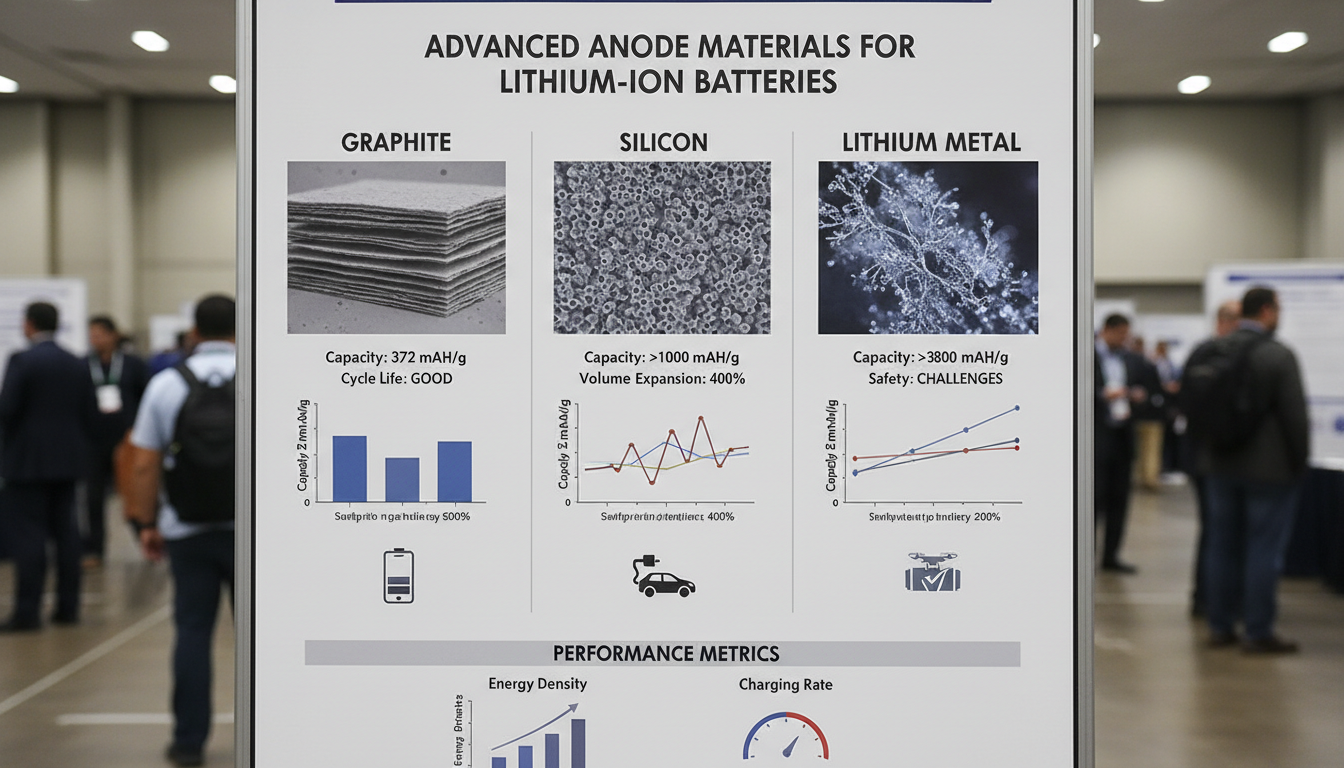
Graphite is the most widely used and longest-standing anode material for lithium-ion batteries. This material has powered everything from smartphones to electric vehicles for decades. As graphite is limited to a maximum capacity of 372 mAh/g much research has been dedicated to the development of materials that exhibit higher theoretical capacities, but graphite still dominates the market.
Graphite anode materials are classified into natural graphite and synthetic graphite. Natural graphite costs less to produce and offers decent storage capacity, while synthetic graphite provides better consistency and cycle life. Natural graphite has a high lithium-ion storage capacity and lower production costs, but its internal structure expands during charge and discharge cycles, which can shorten battery lifespan.
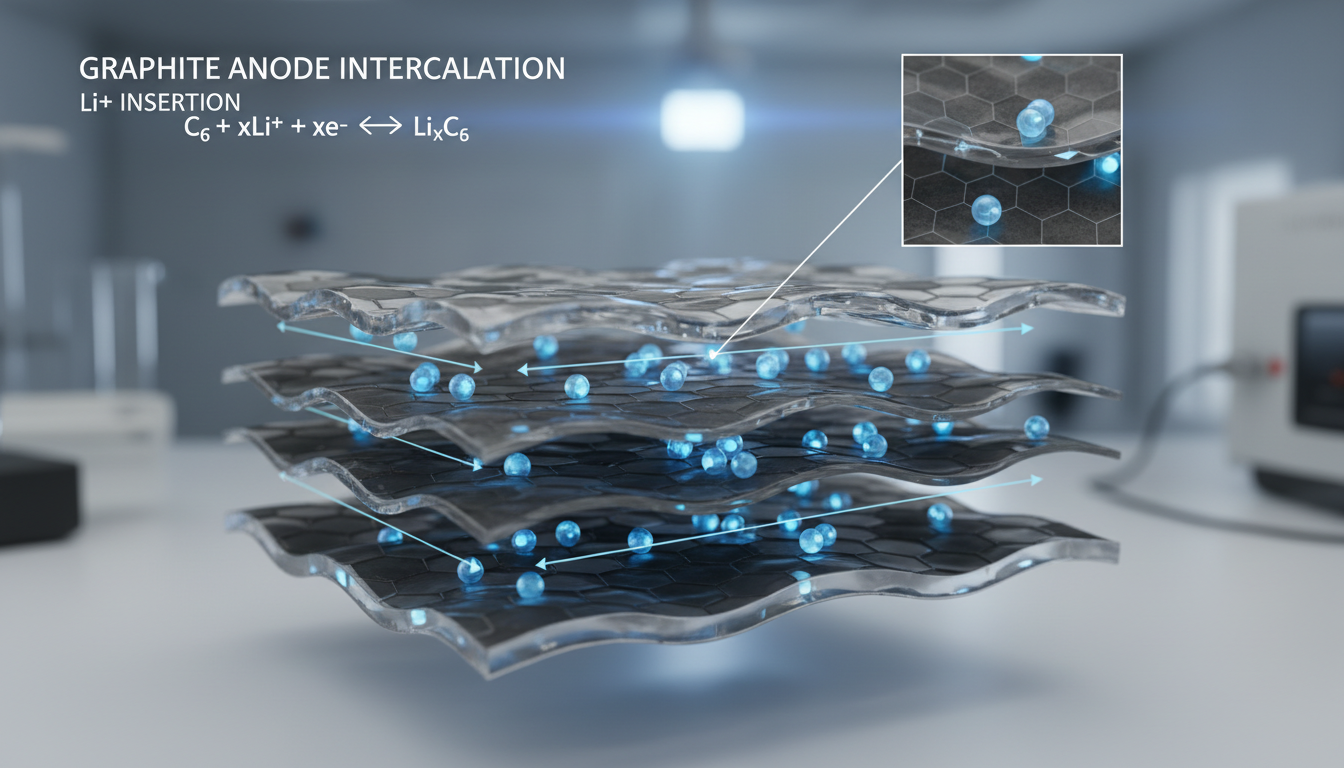
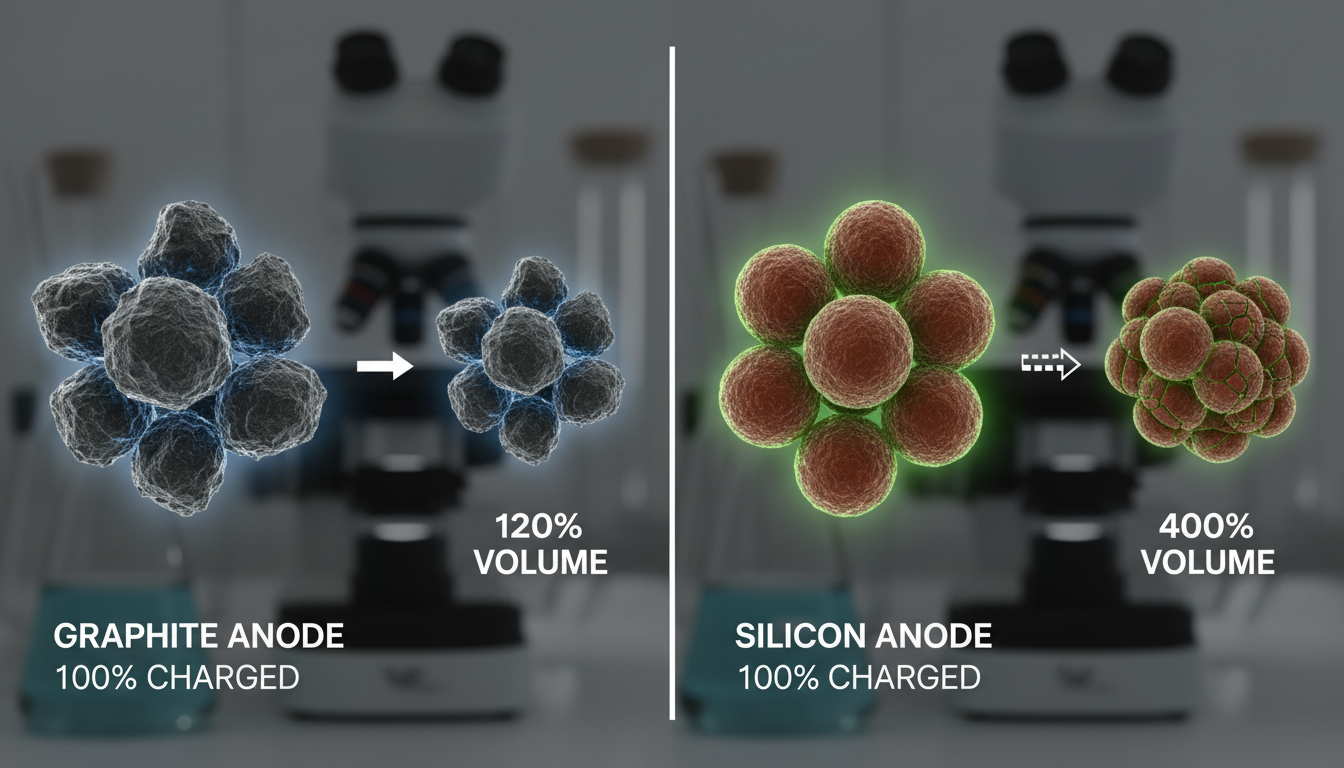
The real advantage? Graphite handles lithium-ion insertion smoothly without dramatic volume changes—around 10% expansion compared to other materials. This stability translates to reliable performance across thousands of charge cycles. Our work with ternary lithium batteries demonstrates how pairing quality graphite anodes with advanced cathode materials delivers consistent results.
Silicon Anodes: The Future Is Here
Silicon has long held out promise as a medium for anodes, because it can hold 10 times as many lithium ions by weight as graphite. That's a game-changer for energy density. While graphite stores one lithium ion per six carbon atoms, silicon can store 4.4 lithium ions per silicon atom. Thanks to this property, silicon anodes offer more than four times the specific capacity per gram compared to graphite, allowing batteries to store significantly more energy.
But there's a catch. Graphite handles them well, but a silicon anode swells more than 300%, causing its surface to crack and energy storage performance to drop rapidly. Now, however, after some 15 years of incremental improvements and dashed hopes, silicon's time as a mainstay material in batteries has finally arrived.
The 18650 GEN3-based batteries performed remarkably well, with an overall capacity improvement of about 40% compared to a graphite benchmark. Companies are developing nano-engineered silicon structures and silicon-carbon composites that manage the expansion problem. Tesla has reportedly added up to 5 percent silicon in its batteries' anodes.
Comparing Anode Material Performance
Material Type
Theoretical Capacity (mAh/g)
Volume Expansion
Current Status
Graphite
372
~10%
Industry standard
Silicon
3,600-4,200
>300%
Emerging/limited use
Silicon-Graphite Blend
500-1,500
Moderate
Commercial adoption
Lithium Metal
3,860
Infinite
Research phase
This comparison shows why the battery industry hasn't simply switched to silicon overnight. The numbers look amazing on paper, but real-world applications need materials that balance capacity with stability and cost.
Next-Generation Developments
Alongside silicon anode materials, a material that is rapidly emerging as the next-generation anode is lithium metal (Li-metal). Lithium metal anode materials have an exceptionally high capacity per unit mass, allowing more energy to be stored at the same weight. While graphite's theoretical capacity is 372 mAh/g, lithium metal has a theoretical capacity of 3,860 mAh/g—over 10 times higher than that of graphite.
Research labs and battery manufacturers are testing various approaches. Nanostructured materials, 3D porous architectures, and protective coatings all aim to push performance boundaries. Production capacity for silicon-based anode materials is expected to grow rapidly over the next 5 years, while funding into silicon anode start-ups is estimated to have exceeded US$4.5 billion 2024, showing serious industry commitment.
The company plans to apply lithium metal anode materials to batteries for low-capacity systems starting at the end of 2027, with plans to expand to high-capacity system products thereafter. The timeline suggests we'll see commercial applications sooner than many expected. Our experience with LFP batteries shows that newer technologies can scale faster when the right manufacturing processes align.
Real-World Applications
Different applications demand different anode characteristics. Electric vehicles need high energy density for range, quick charging capabilities, and long cycle life. Grid storage prioritizes cycle life and cost over weight. Portable electronics balance energy density with safety and size constraints.
Silicon promises longer-range, faster-charging and more-affordable EVs than those whose batteries feature today's graphite anodes. It not only soaks up more lithium ions, it also shuttles them across the battery's membrane faster. And as the most abundant metal in Earth's crust, it should be cheaper and less susceptible to supply-chain issues.
Manufacturers are already shipping products. As things stand, nearly all graphite anode material is processed in China. This supply chain concentration has pushed companies and governments to invest in domestic production capabilities and alternative materials. Silicon's abundance makes it attractive from a supply security standpoint.
Conclusion
Anode materials form the backbone of battery performance, directly affecting energy capacity, charging speed, and lifespan. Graphite continues to dominate current production thanks to its proven reliability and manageable characteristics. Silicon-based materials promise dramatic capacity improvements but require sophisticated engineering to handle volume expansion challenges. Lithium metal anodes remain in development but could revolutionize energy storage in the coming decade.
The transition from traditional graphite to next-generation materials won't happen overnight. We'll likely see gradual adoption of silicon-graphite blends before pure silicon or lithium metal anodes become mainstream. The visual data in anode material infographics helps simplify these complex relationships, making it easier to understand trade-offs between different material choices. As manufacturing processes mature and costs decrease, expect to see more advanced anode materials powering the devices and vehicles we use daily.
FAQs
What makes silicon anodes better than graphite for batteries?
Silicon can store roughly 10 times more lithium ions per unit weight compared to graphite, potentially increasing battery capacity by 20-40%. However, silicon expands more than 300% during charging, which can damage the battery structure. Modern silicon anodes use nanostructures and composite designs to manage this expansion while capturing the capacity benefits.
Why isn't everyone using the highest-capacity anode materials?
Higher capacity materials like pure silicon or lithium metal face technical challenges including volume expansion, manufacturing complexity, and cost. Graphite remains dominant because it offers reliable performance at reasonable cost with proven manufacturing processes. The industry is gradually adopting blended materials that balance performance gains with practical considerations.
How do anode materials affect electric vehicle range?
Anode materials directly determine how much energy a battery can store. Higher-capacity anodes like silicon-enhanced materials can increase battery energy density by 20-40%, translating to longer driving range without increasing battery size or weight. The charging speed also depends on how quickly lithium ions can move in and out of the anode material.
What's the difference between natural and synthetic graphite anodes?
Natural graphite costs less and offers high lithium-ion storage capacity but experiences more structural expansion during cycling, potentially shortening battery life. Synthetic graphite provides more consistent performance and better cycle life but costs more to produce. Many manufacturers blend both types to balance cost and performance.
When will next-generation anode materials become widely available?
Silicon-graphite blends are already in commercial use, with some manufacturers adding up to 5% silicon to graphite anodes. Higher silicon content anodes are entering production now, with major expansion expected by 2027-2028. Pure silicon and lithium metal anodes remain primarily in research and development, with limited commercial applications expected in the next 3-5 years.
Highstar attaches great importance to your personal privacy. When you visit our website, please agree to the use of all cookies. More information about the processing of personal data can be found at "Privacy Policy"


 Buy
Buy